
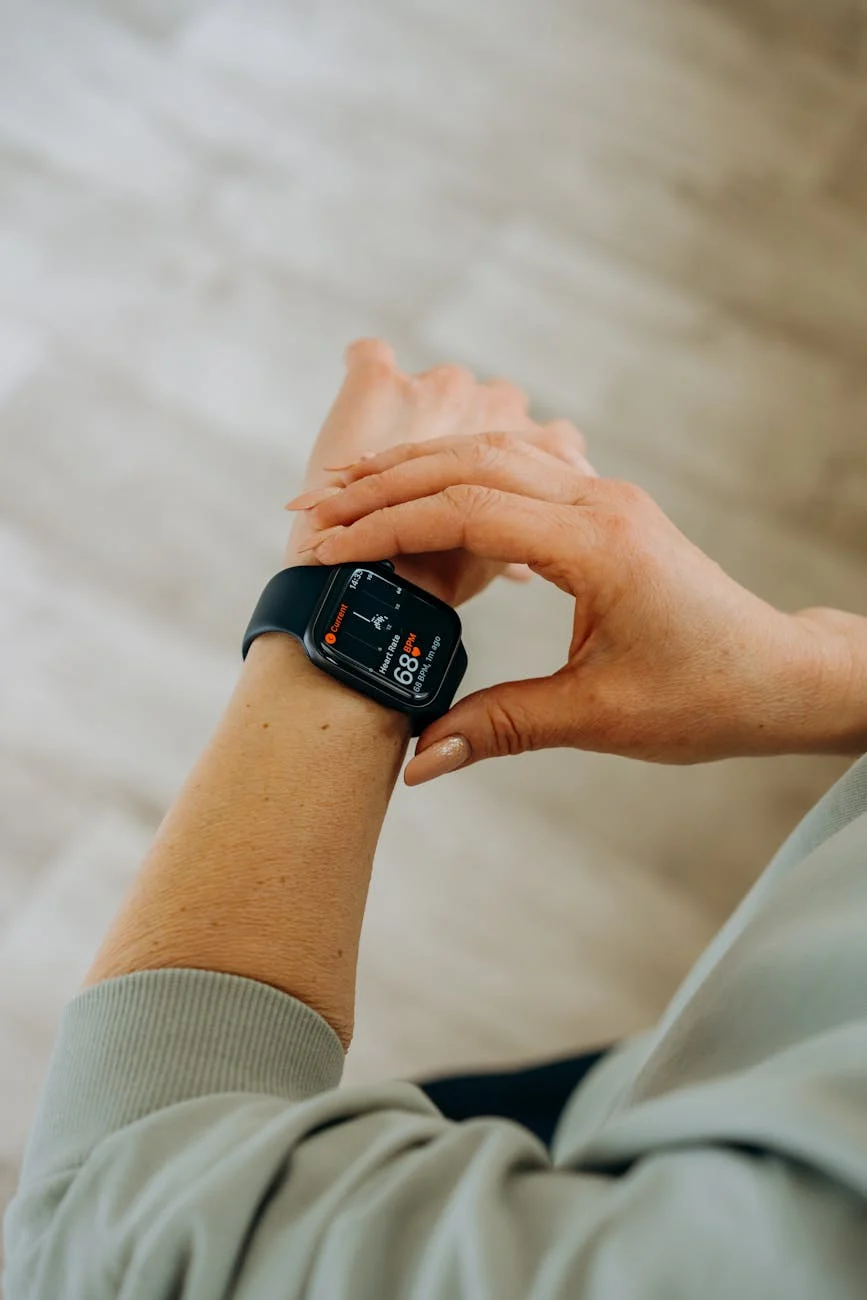
Stop trusting health apps blindly:
most people download one, get excited for a week, and stop using it long before any meaningful biomarker changes.
That matters because longevity is built on boring, repeatable inputs: sleep, movement, nutrition, stress, and the occasional lab check. This ranking is AI-researched from peer-reviewed evidence, wearable validation studies, and behavior-change trials. Stay to the end for the key insight that separates the apps that actually improve healthspan from the ones that mainly monetize your anxiety.
[Opening statistics graphic: chronic disease prevalence, app abandonment curve, wearable adoption trend]
OTHER RELEVANT BLOG POST


Context & Why This Matters
If you are in your late 20s through mid-50s, this is the decade where preventive health either compounds or quietly falls apart. About 6 in 10 adults live with at least one chronic disease, and the biggest drivers of healthspan loss are still the basics: poor sleep, low activity, excess visceral fat, high blood pressure, metabolic dysfunction, and chronic stress. Health apps can help because they turn abstract advice into feedback loops. But they can also hurt if they create false certainty, information overload, or expensive placebo effects.
- Self-monitoring is one of the most replicated behavior-change tools in digital health research.
- Wearables can improve awareness of steps, sleep, and recovery, but consumer sleep staging is not the same as polysomnography.
- Nutrition tracking can be useful for protein, fiber, and calorie awareness, but food logging only works when it is simple enough to keep doing.
- Stress and mindfulness apps show modest but real benefits in randomized trials and meta-analyses when people actually use them.
So the real question is not, which app has the flashiest AI? It is, which app changes your actual behavior, gives you reliable data, and helps move meaningful biomarkers like resting heart rate, HbA1c, blood pressure, body composition, and sleep duration in the right direction?
AI Research Analysis
I scored each app using five factors: strength of evidence, data accuracy, behavior-change power, longevity relevance, and scam risk. The strongest evidence comes from systematic reviews, randomized controlled trials, and validation studies against gold standards such as polysomnography, clinical labs, or medical-grade sensors. The weakest evidence comes from marketing claims with no published methods.
Evidence tiers
- Tier A: Backed by strong validation, randomized trials, or multiple systematic reviews.
- Tier B: Useful and promising, but evidence is narrower or use depends on the user.
- Tier C: Weak evidence, high hype, or obvious scam risk.
[Data comparison table or evidence ranking graphic]
| Rank | App or Category | Evidence Tier | Best For | AI Verdict |
|---|---|---|---|---|
| 1 | Apple Health + Apple Watch | Tier A | Data hub, activity, heart rhythm trends | Best overall foundation for most people |
| 2 | Cronometer | Tier A | Protein, fiber, micronutrients, nutrient precision | Best nutrition app for data-driven users |
| 3 | Oura Ring | Tier A/B | Sleep, recovery, readiness trends | Excellent if sleep is your main lever |
| 4 | Fitbit | Tier A/B | Steps, habit nudges, budget-friendly wearables | Best value for broad wellness tracking |
| 5 | Headspace / Calm | Tier A/B | Stress reduction, meditation, sleep wind-down | Useful if stress and sleep are the bottleneck |
| 6 | MyFitnessPal | Tier B | Calorie awareness, macro tracking | Fine if you want simplicity, not micronutrient depth |
| 7 | CGM companion apps for select users | Tier B | Metabolic feedback, prediabetes, insulin resistance | Strategic tool for the right person, not a default buy |
| 8 | AI selfie diagnosis apps | Tier C | Nothing reliably validated | High scam risk, skip it |
| 9 | Detox, cleanse, and supplement quiz apps | Tier C | Marketing funnels | Usually an upsell, not a health tool |
The peer-reviewed pattern is consistent across the literature: apps work best when they make one or two behaviors easier to repeat. That is why systematic reviews in journals like JAMA Network Open, npj Digital Medicine, BMJ, JMIR mHealth and uHealth, Sleep Medicine Reviews, and Obesity Reviews keep finding the same result. The intervention is not magic. The intervention is adherence.
What the science supports most strongly:
- Self-monitoring: tracking steps, food, sleep, or weight can improve outcomes when the feedback loop is simple and frequent.
- Wearable trend data: useful for behavior change and trend awareness, especially for activity and resting heart rate.
- Mindfulness and stress apps: modest but meaningful reductions in stress and anxiety are common in controlled trials.
- CGM for selected adults: best for people with prediabetes, insulin resistance, or clinician-guided experiments, not for casual curiosity.
- Sleep scoring: good enough for trends, not accurate enough to diagnose sleep disorders.
What the science does not support:
- Diagnosing disease from a selfie, tongue photo, or nail scan.
- One-click supplementation plans from a questionnaire with no labs.
- Detox, cleanse, or reset programs that claim to remove toxins without defining the toxin, the mechanism, or the outcome.
- Using one bad sleep score to panic about your health span.
Practical Application
Here is the simplest evidence-based protocol for most health-conscious adults:
- Choose one data hub. Use Apple Health or Google Health Connect to centralize your metrics.
- Choose one nutrition app. Use Cronometer if you care about protein, fiber, and micronutrients; use MyFitnessPal if you mainly need calorie awareness and convenience.
- Choose one recovery app or wearable. Pick Oura if sleep is your biggest issue, Fitbit if you want lower cost, or Apple Watch if you want the whole ecosystem.
- Run a 14-day baseline. Do not overhaul everything at once. Track your current sleep, steps, meals, and stress first.
- Make one change at a time. The highest-return moves are walking 10 minutes after lunch and dinner, strength training 2 to 4 times per week, and keeping your bedtime within a 30-minute window.
- Use the right nutrition targets. For most active adults, aim for roughly 1.2 to 1.6 g protein per kg body weight per day, 25 to 40 g fiber per day, and enough calories to recover without over-snacking.
- Review weekly, not emotionally. Use averages, trends, and seven-day rolling data. One high-glucose meal or one bad sleep night is not a diagnosis.
If you use supplements, log them only after labs or a clinician-guided plan. A supplement tracker is useful for adherence to evidence-based items such as vitamin D, B12, iron, magnesium, creatine, or omega-3 only when there is a real reason to use them. An app that recommends a stack from a selfie is not personalization. It is sales.
If you want the most defensible affiliate-friendly stack, the short list is:
- Apple Watch or Fitbit Charge for activity and heart rate trends
- Oura Ring for sleep and recovery feedback
- Cronometer Premium for serious nutrition tracking
- Headspace or Calm for stress and sleep routines
Common Mistakes & Misconceptions
- Using too many apps at once. More data usually means less adherence. Fix: keep one hub, one nutrition tool, and one recovery tool.
- Confusing trend data with medical diagnosis. A wearable can flag a pattern, but it cannot replace bloodwork, blood pressure checks, or a clinician. Fix: use apps to inform decisions, not to self-diagnose.
- Buying CGM hardware without a metabolic question. If you do not have prediabetes, insulin resistance, or a clear experiment, the data can become expensive noise. Fix: use CGMs strategically, not as a lifestyle accessory.
- Trusting apps with no published validation. If the company will not show methods, accuracy, or research, treat the claims as marketing. Fix: look for peer-reviewed validation and comparison against gold standards.
- Changing too much too fast. People quit when the plan is unrealistic. Fix: improve one metric per month, not ten metrics in one week.
The AI-Optimized Recommendation
Based on the evidence, the best move in 2025 is a minimalist, evidence-first stack: use Apple Health or Health Connect as your data hub, Cronometer for nutrition, and either Oura or Fitbit for sleep and activity. Add Headspace or Calm if stress and sleep quality are your limiting factors. Use a CGM only if you have a clear metabolic reason and a plan to act on the data. Skip anything that promises diagnosis from a face scan, detox from an app subscription, or a miracle supplement stack generated by AI.
The key insight is simple: the best health app is not the smartest one. It is the one that helps you do the same few proven things every week: sleep enough, move more, eat enough protein and fiber, reduce stress, and track a small number of meaningful biomarkers. That is what actually compounds into better healthspan.
Bottom line: if an app makes you more consistent, it earns its place. If it makes you more confused, it is probably the scam.
Frequently Asked Questions
Why do most health apps fail even when the data they show seems useful?
Because information alone rarely changes behavior. Many apps create a short burst of motivation, but the benefit only appears when the app helps you repeat a small set of habits consistently: sleep, movement, nutrition, and stress control. If the feedback loop is too complicated, people stop using it before any meaningful biomarker changes happen.
Is Apple Health + Apple Watch enough on its own, or do you need other apps too?
For most people, it is the best foundation because it centralizes activity, heart rhythm trends, and other health data in one place. But it is not a complete solution by itself. It works best when paired with one focused app for your main bottleneck, such as nutrition, sleep, or stress, instead of stacking multiple trackers.
How accurate are wearable sleep scores if they are not the same as a sleep lab test?
They can still be useful, but mainly for trends rather than diagnosis. Consumer wearables are good at showing whether you slept more or less, whether your routine is improving, and how recovery changes over time. They are not the same as polysomnography, so they should not be treated as a clinical sleep study.
Who should actually use a CGM companion app, and who is probably wasting money?
CGM apps make the most sense for people with prediabetes, insulin resistance, or a clear metabolic question they want to test. They are less useful as a default purchase for healthy users who are already eating well and exercising regularly. Without a specific goal, they often create noisy data instead of actionable insight.
What makes AI selfie diagnosis apps a scam risk compared with the other apps on the list?
They usually promise medical-style insight from a photo or a short scan without strong validation against clinical standards. That is a red flag because they can sound precise while actually being vague, unproven, or misleading. The bigger problem is that they often monetize fear by making normal variation look like a health threat.