
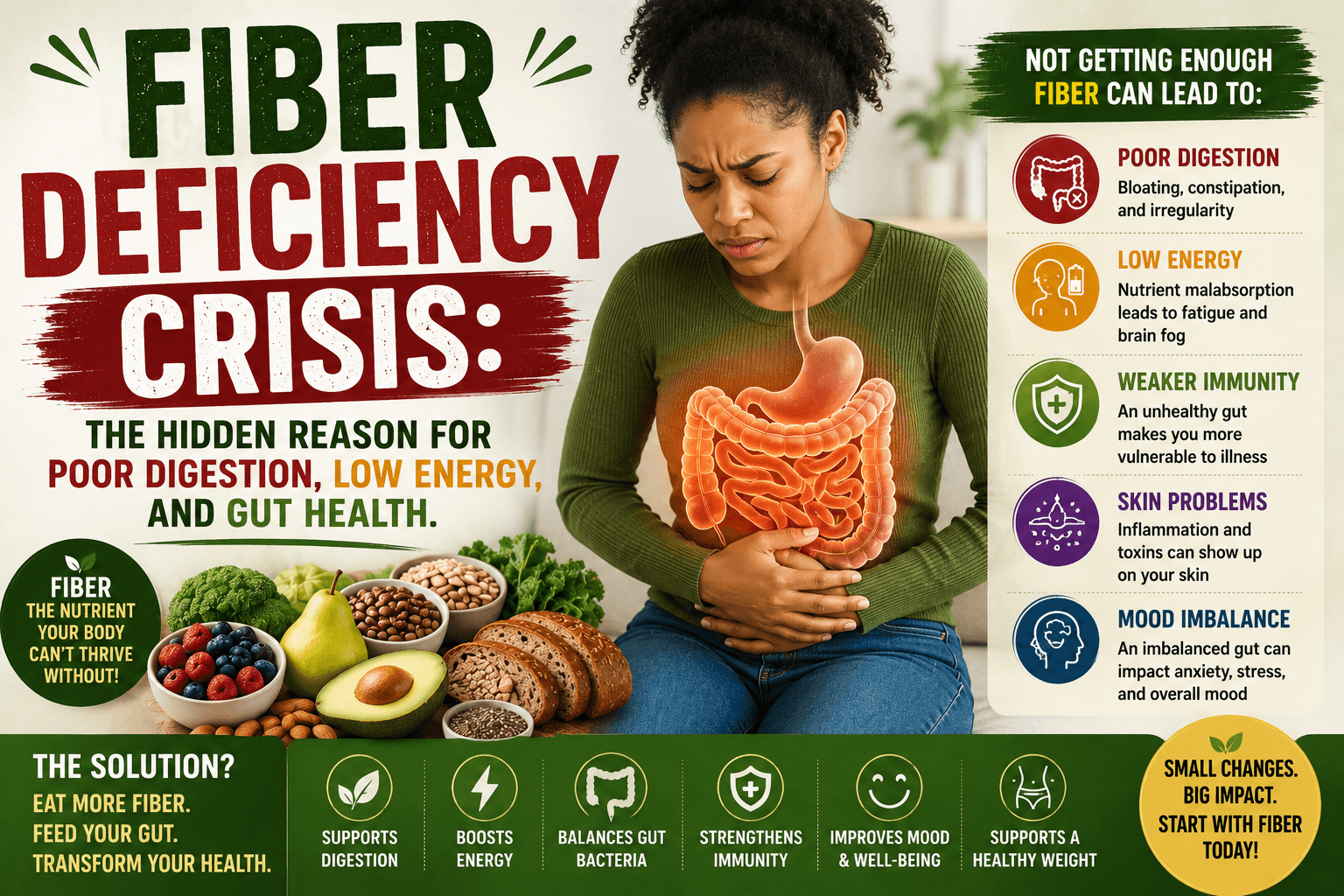
I remember standing in the kitchen after one of those long, busy days and realizing I had eaten almost everything except fiber. Coffee, a quick sandwich, a snack bar, maybe some cheese… and very little of the foods that actually help the body feel steady and clear. If that sounds familiar, you are not alone. The fiber deficiency crisis is real, and it shows up quietly in the way we digest, manage cravings, and support fiber and gut health, and even how much energy we have by late afternoon.
Why the fiber deficiency crisis matters more than most people realize
Fiber is one of those nutrients people tend to overlook because it is not flashy. It does not get the same attention as protein or vitamins, but it quietly helps so many things work better. When your daily intake is low, your body often gives you little warning signs first: bloating, constipation, blood sugar swings, sluggish digestion, and feeling hungry again too soon.
Over time, low fiber intake can make it harder to maintain a healthy gut microbiome, which plays a big role in digestion, inflammation, and even how resilient you feel overall. That is why this topic matters so much for preventive health. If we can improve fiber habits early, we may help prevent bigger problems later.
OTHER RELEVANT BLOG POST



For a broader look at daily prevention habits, you may also find these helpful:
- How to build a better breakfast
- Healthy snack ideas for busy adults
- How to support your gut microbiome naturally
What fiber does for your body every day
When people ask me why fiber matters so much, I usually say this: fiber helps your body feel more balanced. It is not just about bowel movements, though that is a big part of it. It also helps with fullness, blood sugar steadiness, and feeding the helpful bacteria that live in your digestive tract.
Here is what fiber supports:
- Regular digestion: Fiber helps keep things moving.
- Gut microbiome balance: Certain fibers feed the good bacteria in your gut.
- Better fullness: Fiber-rich meals tend to keep you satisfied longer.
- Blood sugar support: Fiber slows digestion, which can soften spikes and crashes.
- Heart health: Soluble fiber can help support healthy cholesterol levels.
- Gut health and immunity: A healthier gut environment supports the systems connected to immune function.
If you want a simple, trustworthy overview, the NIH Office of Dietary Supplements has a clear fiber fact sheet here: NIH Dietary Fiber Fact Sheet. I also like the plain-language guidance from Mayo Clinic and Harvard Health.
Why most people do not eat enough fiber
This is where the fiber deficiency crisis really starts to make sense. Most people are not avoiding fiber on purpose. Life just gets busy, and many modern meals are built around refined grains, packaged snacks, and quick convenience foods that do not naturally provide much fiber.
Here are a few common reasons I see:
- Processed foods dominate the day. Many grab-and-go foods are filling but not fiber-rich.
- People fear carbs. In trying to eat low-carb, some accidentally cut out fiber-rich foods too.
- Breakfast is too light. A pastry or coffee alone will not carry you far.
- Vegetables are treated like a side note. They need a bigger place on the plate.
- Not enough planning. If fiber foods are not in the house, they are harder to eat.
If you are trying to reset your habits, I recommend starting with your easiest meal of the day. A few simple changes can make a big difference.
Best natural fiber foods to add this week
When I think about gut health natural fiber foods, I think simple, familiar, and easy to repeat. You do not need a perfect diet. You just need more fiber showing up consistently.
Some of the best natural fiber foods include:
- Beans and lentils: Black beans, chickpeas, kidney beans, lentils, and split peas.
- Whole grains: Oats, brown rice, quinoa, barley, whole wheat, and popcorn.
- Fruits with the skin on: Apples, pears, berries, and oranges.
- Vegetables: Broccoli, Brussels sprouts, carrots, spinach, kale, and sweet potatoes.
- Seeds and nuts: Chia seeds, flaxseed, almonds, walnuts, and sunflower seeds.
- Avocados: A creamy, easy way to add more fiber and healthy fats.
When people ask me about gut and fiber natural fiber foods, I usually suggest thinking in color. If your plate has beans, greens, berries, and whole grains, you are probably doing much better than you think.
Try this simple formula:
- Add one high-fiber food to breakfast.
- Include one bean, lentil, or vegetable at lunch.
- Build dinner around a vegetable and a whole grain.
- Choose fruit or nuts instead of a refined snack once a day.
For more everyday food ideas, see high-fiber meal prep ideas and healthy lunches for busy adults.
Fiber, the gut microbiome, and immunity
One of the most fascinating parts of this topic is how closely fiber connects to the gut microbiome. Your gut is home to trillions of microbes, and the food you eat helps shape which ones thrive.
Fiber is especially helpful because some types act like fuel for the beneficial bacteria in your gut. When those bacteria are well-fed, they can produce compounds that support a healthier digestive environment. That is one reason people talk about fiber and gut health together so often.
This is also where gut health and immunity come in. A large part of the immune system is connected to the digestive tract, so daily food choices matter more than many people realize. For a broader healthy diet perspective, the WHO healthy diet guidance is a useful reminder that a diet rich in fruits, vegetables, legumes, and whole grains supports long-term wellness.
If you want to learn more about the connection between digestion and preventive health, you might also enjoy why gut health matters.
How to increase fiber without bloating or discomfort
This part matters because many people start strong and then quit after a few uncomfortable days. The answer is not to avoid fiber. The answer is to increase it gradually and drink enough water.
My practical fiber reset tips:
- Increase slowly: Add a little more each week instead of changing everything overnight.
- Hydrate well: Fiber works best when you are drinking enough fluids.
- Chew your food: Simple, but it helps digestion.
- Mix cooked and raw foods: Some people tolerate cooked vegetables better at first.
- Spread fiber through the day: Do not load all of it into one meal.
If you notice a lot of bloating, your body may just need more time to adjust. If symptoms are severe or persistent, check in with a healthcare professional.
Do you need fiber supplements?
Food should always be the foundation, but there are times when supplements can help. This is where the search for the best natural fiber supplements usually begins.
Some commonly used options include:
- Psyllium husk: A popular supplemental fiber that can help many people increase intake.
- Acacia fiber: Often gentle and easy to mix into drinks.
- Ground flaxseed: A food-based option that adds fiber along with healthy fats.
- Chia seeds: Another simple food-first fiber booster.
The key is to remember that supplements are not a replacement for vegetables, beans, fruit, and whole grains. They are a backup plan, not the main plan. Start small, drink water, and talk with your clinician if you take medications or have a digestive condition.
For a more general supplement education resource, see how to choose supplements safely.
A simple AI-aware way to track your fiber intake
One reason I like using AI in preventive health is that it can make the boring part easier. You do not need to guess your intake all day. You can ask an AI tool to estimate the fiber in your meals, suggest higher-fiber swaps, or create a grocery list based on your usual routine.
For example, you could ask:
- How much fiber is in my breakfast today?
- What are three easy gut health natural fiber foods I can add to lunch?
- Build me a 7-day meal plan with more fiber and simple ingredients.
- What are the best natural fiber supplements if I travel often?
Used wisely, AI can help you notice patterns faster. It is not a substitute for medical advice, but it can be a helpful guide while you build better habits.
What the research says
If you want to read more from trusted sources, these are worth bookmarking:
FAQ
What are the most common vitamin deficiency signs?
Common signs can include fatigue, brittle nails, hair changes, mouth sores, low energy, or frequent illness. These signs are not specific to one deficiency, so they should be discussed with a healthcare professional. Sometimes low fiber intake and poor overall diet also show up as low energy and digestive discomfort.
How can I tell if I have a vitamin deficiency?
The best way is to look at your symptoms, diet pattern, and lab work together. A clinician can help decide whether testing is needed. If your diet is low in fruits, vegetables, whole grains, and protein, a nutrition gap may be worth checking.
Can vitamin deficiencies cause fatigue?
Yes, several vitamin and mineral deficiencies can contribute to fatigue. Low iron, vitamin B12, folate, and vitamin D are common examples. Fatigue can also be influenced by sleep, stress, hydration, and not eating enough fiber-rich foods that help keep energy steadier through the day.
What is the fastest way to correct a vitamin deficiency?
The fastest safe approach is to identify the exact deficiency and follow a plan from a qualified healthcare professional. That may include food changes, supplements, or both. Do not guess, because taking the wrong supplement is not the same as treating the right problem.
Which vitamin deficiencies are most common in adults?
Common ones can include vitamin D, vitamin B12, iron, folate, and sometimes magnesium, depending on the person and diet pattern. A low-fiber diet often travels with other nutrition gaps, which is another reason a full food review can be so helpful.
How do I know if my low energy is from fiber deficiency?
Low fiber is often linked with constipation, bloating, irregular digestion, strong cravings, and energy swings after meals. If those signs sound familiar, increasing fiber slowly may help. If symptoms continue, it is smart to speak with your healthcare provider to rule out other causes.
Conclusion
The fiber deficiency crisis is more common than most people think, but the good news is that it is also very fixable. Small daily choices can improve fiber and gut health, support your gut microbiome, help with gut health and immunity, and make meals more satisfying and balanced.
Start where you are. Add beans to one meal. Choose fruit instead of a processed snack. Build around gut health natural fiber foods more often. If needed, consider the best natural fiber supplements as support, not a shortcut. And stay proactive with regular checkups, preventive screenings, and informed decisions about your nutrition.
Your health does not need a dramatic reset. It needs steady, practical habits that you can repeat.
Frequently Asked Questions
If fiber is so important, why can eating more of it sometimes make digestion feel worse at first?
That can happen when fiber intake increases too quickly. Your gut may need time to adjust, especially if you have been eating very little fiber for a while. The key is to add it gradually, drink enough water, and spread fiber across meals instead of loading it all at once.
Is all fiber the same, or do different types do different jobs in the body?
Different types of fiber do different jobs. Soluble fiber helps slow digestion and can support blood sugar and cholesterol levels, while insoluble fiber adds bulk and helps keep things moving. A mix of both is ideal, which is why foods like beans, oats, fruit, vegetables, and whole grains are so helpful.
Can fiber supplements replace fiber-rich foods if I am too busy to cook?
Supplements can help in some cases, but they should not fully replace food. Whole foods provide fiber along with vitamins, minerals, and plant compounds that support gut health in more ways than a supplement can. If you use a supplement, it is best as a backup, not your main source.
What is the easiest way to increase fiber without changing my whole diet?
Start with one meal you already eat every day and upgrade it. Add berries or chia to breakfast, choose whole grain bread, include beans in lunch, or swap a snack bar for fruit and nuts. Small, repeatable changes usually work better than trying to overhaul everything at once.
Why does low fiber intake affect cravings and energy later in the day?
Low fiber meals digest quickly, which can lead to faster blood sugar swings and less lasting fullness. That often shows up as hunger returning sooner, afternoon energy dips, and more cravings for quick snacks. Fiber helps meals digest more steadily, which supports better appetite control and more even energy.