I used to think I was doing everything “right” for sleep: taking some deep sleep supplements, no late coffee, coffee supplement timing, a dark room, an early bedtime, the whole routine. But I still woke up feeling like I had not truly rested. Once I started tracking my sleep with a wearable and an AI summary tool, I noticed a pattern I kept missing—late workouts, stress management, and too much screen time were all nudging my deep sleep down. If you like keeping an eye on your health,
90 DAYS FOOD AND FITNESS JOURNAL
is a simple way to notice what helps and what hurts your sleep.
That experience is what got me interested in the idea of a sleep stack—a small, thoughtful combination of supplements, vitamin timing and habits that may help your body get more deep sleep, without turning bedtime into a chemistry experiment. For people focused on preventive health, this matters because sleep is not just about feeling refreshed. Good sleep supports mood, metabolism, immunity, and recovery. If you also want a simple guide to the sleep side of preventive health, you may like my post on sleep hygiene basics and my notes on using AI for health tracking.
OTHER RELEVANT BLOG POST



What a deep sleep supplement stack really is
A sleep stack is not about taking every supplement you can find supplement formats. It is about choosing a few that fit your body, your schedule, and your goals. The best sleep stack is usually simple. It starts with the basics—less caffeine late in the day, a cool room, less bright light at night, and a steady bedtime. Then, if needed, you add one or two supplements that make sense for you.
Think of it like preventive health for your nights. You are not trying to knock yourself out. You are helping your body relax, settle, and spend more time in the deeper stages of sleep.
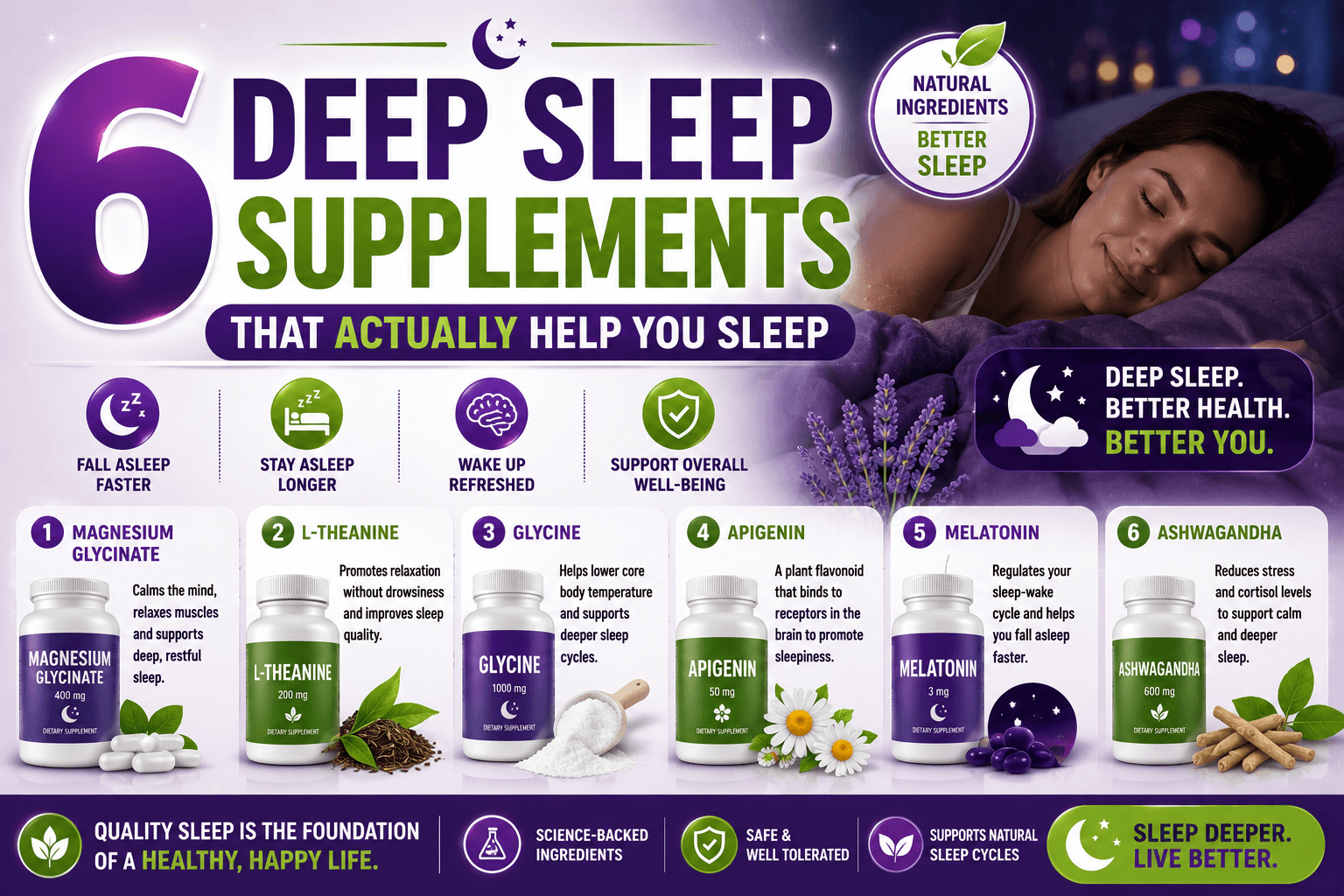
The 6 deep sleep supplements that may improve deep sleep
Below are six options people often use. Not every supplement works the same way for every person, so the smart move is to start slowly, track results, and pay attention to how you feel the next morning.
1. Magnesium glycinate
Magnesium is one of the most talked-about sleep supplements for a reason. It helps the body relax, and low magnesium levels may be linked to poor sleep. Many people prefer magnesium glycinate because it is gentle and easier on the stomach than some other forms.
Best for: stress, tension, and trouble winding down.
Tip: If magnesium helps you, you may notice fewer nighttime awakenings and a calmer feeling before bed. For a quick science check, see the NIH magnesium fact sheet.
2. Glycine
Glycine is an amino acid that may help lower core body temperature and support better sleep quality. Some people say it helps them feel more “rested” in the morning, even when the night was short.
Best for: people who feel wired at night or wake up foggy.
Tip: Glycine is often used as a simple bedtime supplement because it is easy to stack with other basics. It is a good candidate if you want a gentle place to start.
3. L-theanine
L-theanine is found naturally in tea, and it is known for promoting a relaxed, calm state without making most people sleepy in a heavy way. If your mind races at night, this is one of the most interesting options to try.
Best for: mental overthinking, stress, and bedtime anxiety.
Tip: L-theanine is often used by people who want the body to settle while keeping the mind clear.
4. Melatonin
Melatonin is a hormone your body already makes to help regulate sleep timing. It is not really a “knockout pill.” It is more of a timing signal. For many people, a low dose works better than a high one, especially if the goal is to fall asleep sooner or adjust to a new schedule.
Best for: jet lag, schedule changes, and trouble falling asleep.
Tip: Melatonin can be helpful, but more is not always better. If you want to understand the basics and safety notes, the NCCIH melatonin page is a solid place to start.
5. Apigenin
Apigenin is a natural compound found in chamomile. People like it because it can feel calming without being overly strong. It is often used as part of a nighttime routine that tells the body, “It is time to slow down.”
Best for: light stress, relaxation, and a calmer bedtime routine.
Tip: If you already enjoy chamomile tea, apigenin may feel like a natural extension of that habit.
6. Tart cherry extract
Tart cherry has become popular because it naturally contains compounds that may support sleep and recovery. Some people use it after exercise or on nights when they want a little extra support for sleep quality.
Best for: active adults, recovery, and bedtime support after hard training days.
Tip: Tart cherry is especially interesting for people who care about both sleep and exercise recovery, which is why it often shows up in preventive health conversations.
How to build your sleep stack the smart way
If you want this to actually work, keep it simple. The biggest mistake I see is people taking too many things at once and never knowing what helped.
- Start with one supplement. Pick the one that matches your biggest issue, like stress, timing, or waking up too often.
- Add only one new item at a time. Give it a few nights before deciding if it helps.
- Track the result. Use your journal, a wearable, or an AI sleep app to compare bedtime, wake-ups, and how you feel in the morning.
- Keep the basics strong. A cool room, less alcohol, earlier caffeine cutoff, and lower light at night still matter a lot. If you want a simple checklist, see my preventive health routine and the CDC sleep hygiene guide.
- Stop if something feels off. More groggy, more vivid dreams, or a weird next-day feeling can mean the dose or supplement is not right for you.
Where AI fits into better sleep
This is where things get interesting. AI does not replace good habits, but it can help you spot patterns much faster than memory alone. For example, you can look at a week of sleep scores and ask an AI tool to summarize what changed on the nights you slept best. Maybe your deep sleep improved on days you ate earlier, walked more, or skipped late screens. That kind of feedback is powerful because it helps you make smarter choices without guessing.
If you are curious about this side of preventive health, AI can be a helpful coach. Use it to organize your data, not to make every decision for you.
My simple bedtime formula
When people ask me where to start, I usually suggest this:
- Choose one calming supplement.
- Use a consistent bedtime for at least 7 to 10 nights.
- Keep caffeine earlier in the day.
- Dim the lights 1 hour before bed.
- Track your sleep in a journal or app.
That is it. No complicated routine. Just a repeatable process you can actually stick with.
FAQ: The Sleep Stack and deep sleep supplements
Which supplement is best for deep sleep?
There is no single best supplement for everyone, but magnesium glycinate, glycine, and L-theanine are a good starting point for many people. The best choice depends on whether your issue is stress, sleep timing, or waking up during the night.
Can I take all six supplements at once?
I would not start that way. Begin with one supplement and track how you respond. Taking too many at once makes it hard to know what is helping or causing side effects.
How long does it take to notice a difference?
Some people notice a change in a few nights, while others need one to two weeks. Tracking matters because sleep changes can be subtle.
Can AI really help with sleep?
Yes, especially for pattern recognition. AI can help summarize trends from your wearable, notes, and sleep journal. Just remember that it is a tool, not a medical diagnosis.
Are sleep supplements safe for everyone?
Not always. If you are pregnant, nursing, taking medication, or managing a health condition, talk with a healthcare professional before starting a new supplement.
Final thoughts
Deep sleep is one of those quiet health habits that pays off in a big way. You feel it in your energy, focus, mood, and recovery. My advice is to keep your sleep stack small, track what happens, and let the data guide you. That is the preventive health mindset in action: learn from your body, make one smart change, and build from there.
If you want to start tonight, pick one supplement from this list, pair it with better sleep habits, and track the result for 14 days. Small changes can make a big difference.
Related reading: using AI for health tracking
Frequently Asked Questions
Can I take all 6 supplements at the same time, or is it better to split them up?
It is usually better to split them up rather than take everything at once. Some supplements work best 30 to 60 minutes before bed, while others are more effective earlier in the evening or with food. Stacking too many at once can also cause nausea or grogginess, so timing and dose matter as much as the ingredients themselves.
Will these supplements help if my problem is stress or waking up in the middle of the night?
They may help, but the best choice depends on the cause of your sleep issue. Some ingredients are more useful for calming a racing mind before bed, while others may support staying asleep or improving sleep quality. If stress, anxiety, or frequent awakenings are the main problem, the most effective supplement may not be the one that simply makes you feel drowsy.
How long does it usually take to notice deeper sleep after starting a sleep supplement stack?
Some people notice a difference on the first night, but for many supplements the effect is more subtle and builds over several days or weeks. Deep sleep improvements are often easier to see in how refreshed you feel, how often you wake up, and wearable sleep data rather than in a dramatic immediate sedative effect.
Is it possible to get too much deep sleep from supplements?
Yes, in the sense that overly sedating formulas can leave you foggy, unrefreshed, or overly dependent on sleep aids. The goal is not to force sleep but to support natural sleep architecture. If a stack makes you groggy in the morning or worsens sleep quality, the dose or combination is probably too aggressive.
Are sleep supplements safe to combine with melatonin or prescription sleep medications?
Not always. Some supplements can amplify the effects of melatonin, antihistamines, alcohol, or prescription sleep medications, increasing next-day grogginess or other side effects. If you already use a medication for sleep, it is important to check for interactions before adding anything new, especially if the stack includes calming or sedating ingredients.