A few years ago, I had one of those moments where I was trying to get serious about my health, but the advice felt all over the place. One person swore by medication, another by supplements, and I was left wondering what was actually worth my time. If you’ve ever felt that way, this comparison of berberine vs metformin will make the conversation a lot clearer.
Berberine is the natural supplement everyone is talking about, while metformin is a well-known prescription medicine used for blood sugar support. They are not the same, but they do overlap in some ways. If you are focused on preventive health, energy, and better day-to-day habits, it helps to understand both before making any decisions.
Why people compare berberine and metformin
Both are often discussed in the context of blood sugar, insulin resistance, weight management, and metabolic health. That is why they show up in the same conversation so often. But one is a prescription drug with decades of use, and the other is a supplement with growing interest and less long-term research.
In simple terms, metformin has stronger clinical evidence and is usually recommended by a clinician. Berberine may offer similar benefits for some people, but the quality, dose, and response can vary more widely. That’s why it should never be treated like a one-size-fits-all swap.
OTHER RELEVANT BLOG POST



OTHER RELATED BLOG POSTS



What metformin does
Metformin is commonly prescribed for type 2 diabetes and sometimes for conditions related to insulin resistance. It helps the body use insulin more effectively and can reduce the amount of glucose your liver releases into the bloodstream.
If you want a trusted overview, see MedlinePlus on metformin. It is a good reminder that even common medications deserve respect, guidance, and regular follow-up.
What berberine may do
Berberine is a plant compound found in herbs such as barberry and goldenseal. It has become popular because early research suggests it may support healthy blood sugar levels, cholesterol, and overall metabolic balance. Some people like it because it feels more natural, but natural does not always mean harmless.
Berberine can interact with medications and may cause stomach upset in some people. It can also affect how certain drugs are processed in the body, which is why it is smart to talk with a healthcare professional before trying it.
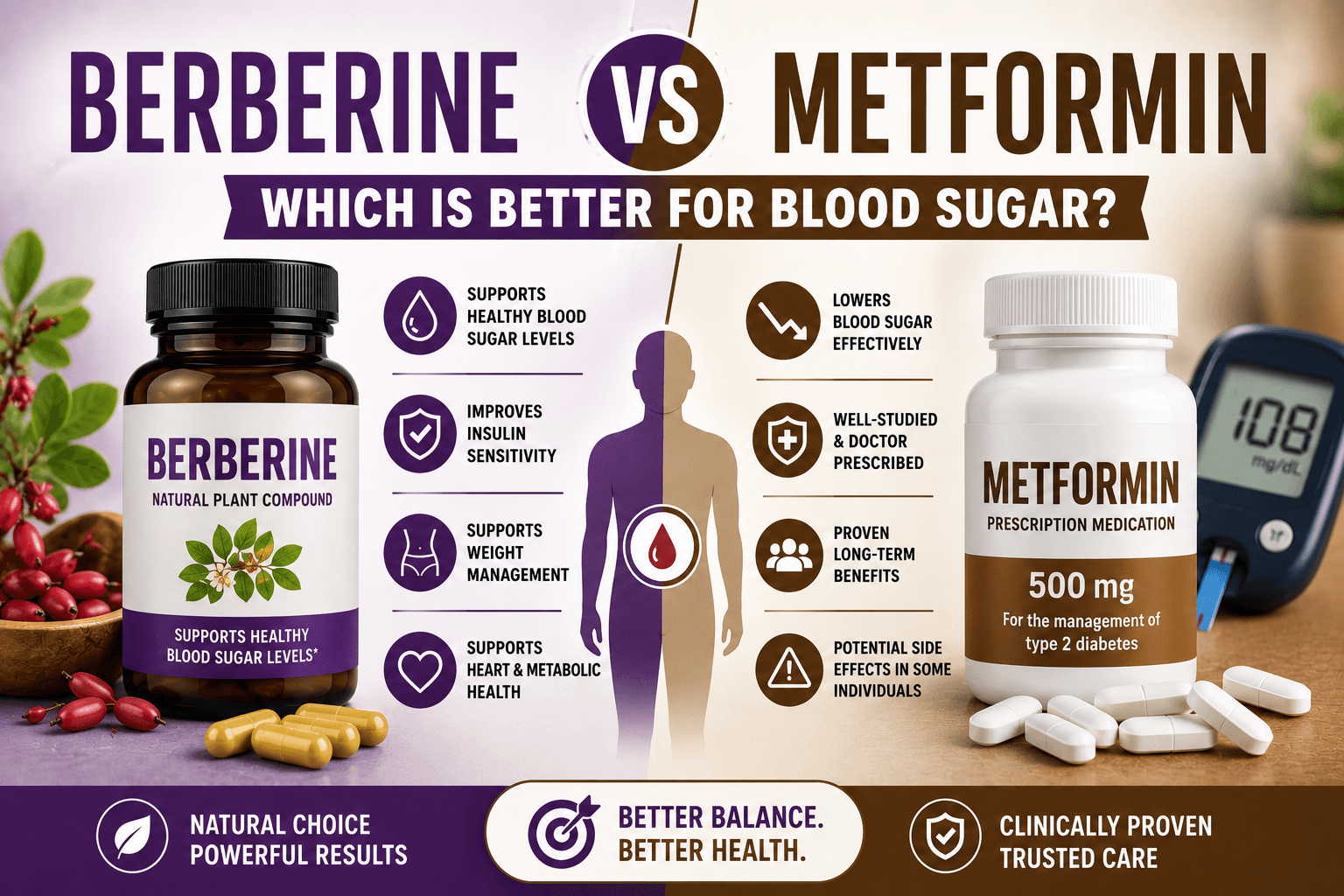
Berberine vs. Metformin: quick comparison
| Topic | Metformin | Berberine |
|---|---|---|
| Type | Prescription medication | Natural supplement |
| Main use | Blood sugar control | Metabolic and blood sugar support |
| Evidence | Strong, long-term research | Promising, but less established |
| Access | Doctor prescribed | Over the counter |
| Common caution | Can affect vitamin B12 over time | Can interact with other medicines and supplements |
Where vitamin and mineral deficiency fits in
Sometimes people think they have a blood sugar problem when they may also have a vitamin and mineral deficiency. Tiredness, brain fog, cravings, and weakness can be signs of deeper issues. In fact, people often search for “vitamin deficiency signs, Signs of vitamin deficiency, Vitamin deficiency symptoms, or Nutrient deficiency symptoms when they are really trying to understand why they feel off.
Some Common vitamin deficiencies include vitamin D, vitamin B12, folate, iron, and magnesium-related gaps. These are part of the bigger picture of Nutritional deficiencies, and they can influence energy, mood, focus, and even how well you handle stress.
Vitamin deficiency causes can include poor diet, restrictive eating, digestive issues, high stress, certain medicines, and not getting enough sunlight. If you are trying to identify vitamin deficiency, start by watching patterns: fatigue after meals, numbness, low mood, poor sleep, frequent illness, or unexplained weakness.
And yes, Vitamin deficiency treatment depends on the cause. Sometimes it is as simple as improving food choices. Other times you may need testing, targeted supplements, or medical support. If metformin is part of your plan, ask your clinician whether monitoring B12 makes sense, because long-term use may lower levels in some people. For more background, the NIH Office of Dietary Supplements is a helpful resource.
A simple preventive health routine you can start this week
- Track your basics. Write down meals, sleep, energy, movement, and symptoms for 7 to 14 days.
- Use AI wisely. An AI-powered journal or symptom tracker can spot patterns you might miss, especially around food, sleep, and cravings.
- Check labs when needed. Ask your healthcare professional about glucose, A1C, B12, vitamin D, iron, and magnesium.
- Review your medicines and supplements. Bring everything to your appointment so nothing gets overlooked.
- Build steady habits. Pair protein, fiber, water, sleep, and walking before chasing the latest trend.
If you like practical guidance, you may also enjoy my internal guides on vitamin deficiency signs, how to use D3 and K2 vitamins, and AI health tracking tools for preventive health.
So, which one is better?
There is no universal winner in berberine vs metformin. If you need a medication-level solution for diabetes or insulin resistance, metformin may be the more evidence-based option. If you are looking for a natural supplement and your clinician says it is appropriate, berberine may be worth discussing.
The smartest move is not to guess. It is to look at your numbers, symptoms, goals, and medical history. That is the real heart of preventive health: making choices early, before small issues become big ones.
FAQ
Is berberine better than metformin?
Not necessarily. Metformin has stronger research and medical supervision behind it. Berberine may help some people, but it is not a direct replacement for everyone.
Can I take berberine and metformin together?
Only with guidance from a healthcare professional. Taking them together may increase the chance of side effects or low blood sugar in some situations.
Does metformin cause vitamin deficiency?
Metformin may lower vitamin B12 over time in some people, which is why regular monitoring is a smart preventive health step.
How do I know if my fatigue is from a vitamin deficiency?
Watch for patterns like low energy, brain fog, weakness, hair changes, cravings, mood shifts, or tingling. Testing is the best way to confirm it.
My biggest takeaway? Do not ignore your body’s signals. If you notice vitamin deficiency symptoms, ask questions early, track your habits, and use both science and support tools to stay ahead. And if you are ready to take a more organized approach to your health, start today with your own tracking plan and talk with a professional who can help you choose the safest path.
Frequently Asked Questions
Can berberine be used as a direct replacement for metformin if someone wants a more natural option?
Not really. Berberine may support blood sugar and metabolic health, but it is not a true one-to-one substitute for metformin. Metformin has stronger long-term clinical evidence and more predictable dosing. If you are considering a switch, it is important to discuss it with a clinician rather than assuming the supplement will work the same way.
Is it safe to take berberine and metformin together?
Sometimes people do combine them, but that should only happen with medical guidance. Both can influence blood sugar, and berberine may also affect how other medicines are processed. Using them together without supervision could increase side effects or make blood sugar drop too low, especially if you already take other glucose-lowering treatments.
If I feel tired and foggy, how do I know whether it is blood sugar issues or a vitamin deficiency?
The symptoms can overlap, which is why it is easy to confuse them. Blood sugar problems may show up as energy crashes after meals, while vitamin or mineral deficiencies often come with broader signs like numbness, low mood, weakness, poor sleep, or frequent illness. Tracking patterns and getting tested is the most reliable way to tell.
Why is vitamin B12 mentioned with metformin, and should people taking it worry about deficiency?
Metformin can affect vitamin B12 levels over time, so it is something clinicians often keep an eye on during long-term use. Not everyone develops a deficiency, but it is a known caution. If you take metformin and notice numbness, tingling, fatigue, or memory issues, B12 testing may be worth discussing.
What makes berberine riskier for some people even though it is sold as a supplement?
Berberine is often seen as gentle because it is natural, but it can still interact with medications and cause stomach upset. It may also change how certain drugs are absorbed or broken down in the body. That means the main concern is not just side effects, but also unexpected interactions with other treatments or supplements.