I still remember the first time I noticed how much sleep affects everything else. I was doing all the “right” things, but if my nights were off, my energy, mood, and focus the next day were off too. If you like tracking habits the simple way, you can use my 90 DAYS FOOD AND FITNESS JOURNAL to notice patterns in sleep, food, stress, and supplements. That is where the real clues usually show up.
When people ask me about magnesium glycinate vs magnesium threonate for sleep and brain health, I usually say this: it depends on your goal. One is often the better pick for calming the body and supporting sleep, while the other may be more interesting if your main focus is brain health, memory, and mental clarity.
Let’s break it down in a simple, practical way.
Magnesium glycinate vs magnesium threonate: what’s the difference?
Both supplements give you magnesium, but they are paired with different molecules, and that changes how they may feel in the body.
OTHER RELEVANT BLOG POST


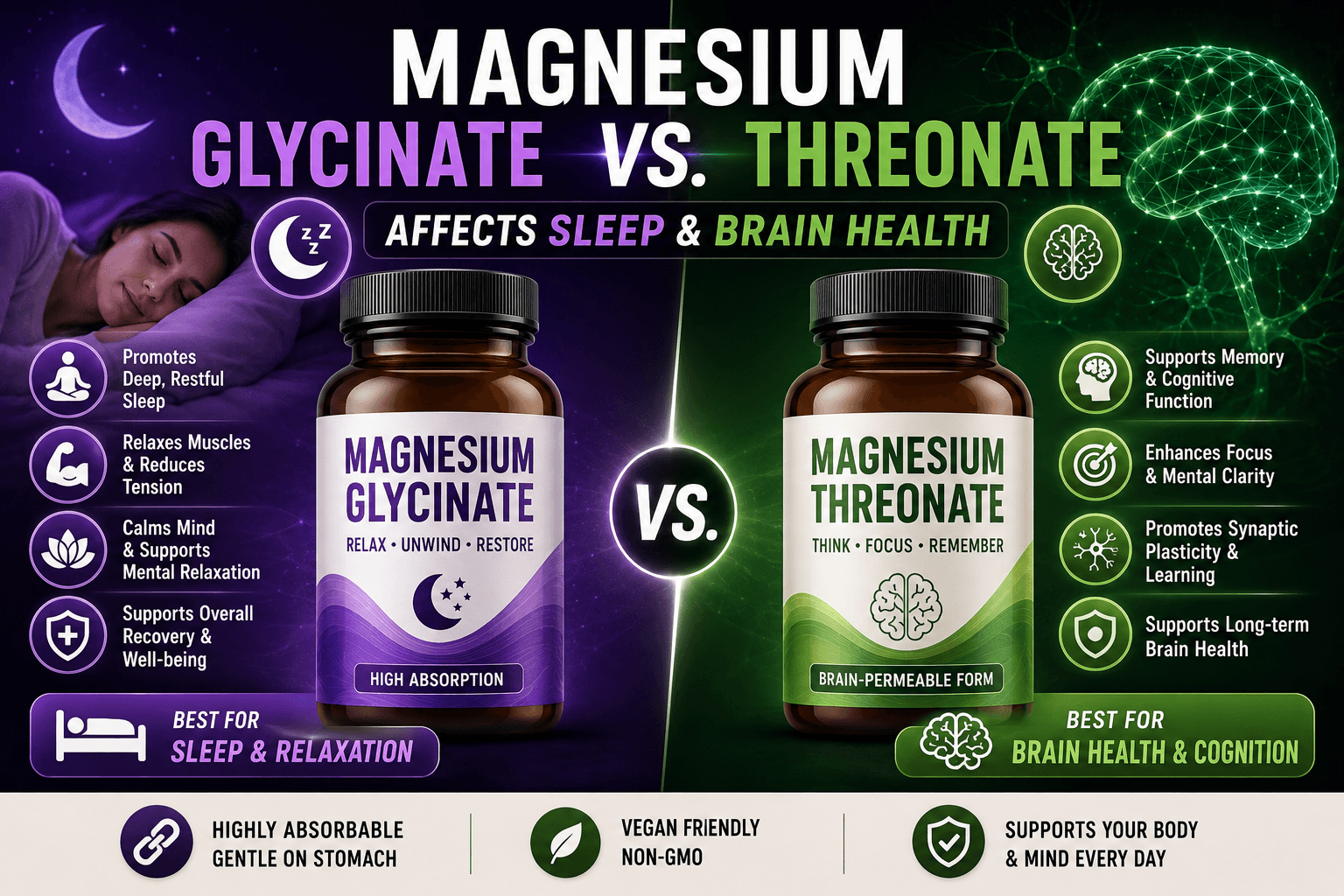
Magnesium glycinate is magnesium bound to glycine, an amino acid that is known for its calming effect. Many people choose it because it is gentle on the stomach and often feels relaxing, especially at night.
Magnesium threonate is magnesium bound to threonic acid. It is often talked about for brain health because it may cross into the brain more easily than some other forms. That is why it gets attention in conversations about memory, focus, and cognitive support.
If you want a science-based overview of magnesium, the NIH fact sheet is a helpful place to start: NIH Magnesium Fact Sheet.
Which one is better for sleep?
If sleep is your main goal, magnesium glycinate is usually the better choice.
Why? Because many people find it helps them feel more relaxed before bed. It may support:
- muscle relaxation
- a calmer nervous system
- better wind-down at night
- fewer stomach issues than some other magnesium forms
That does not mean it is a sleeping pill. It is not. But if your body is stressed, tense, or running on empty, glycinate may help create a better foundation for sleep.
If you want to learn more about supplements that may support deep sleep, this article is worth a look: The Sleep Stack: 6 Supplements That Scientifically Improve Deep Sleep.
OTHER RELEVANT BLOG POST
Which one is better for brain health?
If your main goal is brain health, magnesium threonate is often the more talked-about option.
People are drawn to it because it may support:
- memory
- mental clarity
- learning and focus
- overall cognitive support
That said, I want to be honest here: magnesium threonate is not a magic brain booster. It may be useful as part of a bigger preventive health plan that includes sleep, movement, hydration, good nutrition, stress management, and regular check-ins with your health data.
If you enjoy using AI for preventive health, this is where it can be surprisingly helpful. You can ask an AI tool to summarize your sleep notes, food log, stress level, and supplement timing for the week. That makes patterns easier to see without guessing.
How I would choose between them
Here is my simple decision process:
- If sleep is the priority: start by looking at magnesium glycinate.
- If focus, memory, or brain support is the priority: consider magnesium threonate.
- If you want both: ask a clinician or pharmacist what is appropriate for your total magnesium intake.
- Start low and go slow: some people feel better with a small dose first.
- Track what happens: write down sleep quality, dreams, energy, digestion, and mood for 1 to 2 weeks.
That last step matters more than most people realize. Your body will usually tell you what is working if you give it a little time and pay attention.
Best tips for taking magnesium at night
Here are a few practical tips that make a difference:
- Take it about 1 to 2 hours before bed if it feels calming for you.
- Be consistent for a few nights before deciding whether it helps.
- Avoid stacking too many new supplements at once.
- If magnesium upsets your stomach, try a lower dose or a different form.
- If you have kidney disease, are pregnant, or take prescription medicine, check with a healthcare professional first.
For general sleep guidance from a trusted source, you may also like: Sleep Foundation on Magnesium.
Common mistakes to avoid
When people try magnesium, they often make the same mistakes:
- They expect instant results after one dose.
- They combine several supplements at once and cannot tell what helped.
- They choose a form based only on social media hype.
- They forget that sleep problems can also come from stress, caffeine, screen time, or poor routines.
If you want preventive health to actually work, keep it simple. One change at a time usually wins.
My honest take: which one is “better”?
If I had to keep it very simple:
For sleep: magnesium glycinate usually has the edge.
For brain health: magnesium threonate is often the more interesting option.
But the best choice is the one that matches your goal, your body, and your routine. A supplement only helps when it fits your life.
FAQ: Magnesium glycinate vs magnesium threonate
Can I take magnesium glycinate and magnesium threonate together?
Sometimes, yes, but the total amount of magnesium matters. It is best to check with a healthcare professional, especially if you take medications or have a medical condition.
How long does magnesium take to work for sleep?
Some people notice a difference in a few days, while others need a couple of weeks of consistent use. Sleep habits still matter a lot.
Is magnesium threonate better than glycinate for everyone?
No. Threonate may be a better fit for brain-focused goals, but glycinate is often preferred for relaxation and sleep support.
What if magnesium makes me feel off?
Stop and reassess. You may need a different form, a lower dose, or guidance from a clinician.
Can AI help me manage my sleep and supplement routine?
Yes. AI can help you organize your notes, spot patterns, and remind you what changed when your sleep improved or got worse.
Final thoughts
When it comes to magnesium glycinate vs magnesium threonate for sleep and brain health, I like to think of it like this: glycinate is usually the calmer, bedtime-friendly option, while threonate is often the more brain-focused one. Neither one replaces the basics, though. Good sleep, balanced meals, movement, hydration, stress care, and a simple tracking system still do most of the heavy lifting.
If you want to take the guesswork out of your routine, start with one goal, track your results, and keep your plan simple enough to follow. That is how preventive health becomes a habit, not just an idea.
And if you are ready to keep building your healthy routine, use the journal, watch your patterns, and choose the supplement that fits your goal best.
Frequently Asked Questions
Which form is usually better for falling asleep quickly: magnesium glycinate or magnesium threonate?
Magnesium glycinate is often the more practical choice for sleep because it tends to be calming and is commonly better tolerated. Magnesium threonate is more often discussed for cognitive support than for direct sleep benefits. If the main goal is easing into sleep and reducing nighttime tension, glycinate is usually the first form people try.
If magnesium threonate is for the brain, does that mean it won’t help with sleep at all?
Not necessarily, but its sleep effect is usually considered indirect. Magnesium threonate may support brain function, stress regulation, or mental clarity, which can indirectly make sleep easier for some people. However, it is not typically the go-to option when the main issue is trouble relaxing at bedtime.
Can magnesium glycinate and magnesium threonate be taken together?
They can be combined in some cases, since they serve slightly different purposes, but the total elemental magnesium matters more than the form alone. Taking both may be unnecessary for many people, especially if diet already provides magnesium. It is smart to consider dosing carefully, particularly if you are sensitive to supplements.
Why do some people feel calm on magnesium glycinate but not on other forms?
Glycine, the amino acid bound to magnesium in glycinate, may contribute to a calming effect for some people. In addition, this form is generally gentle on the stomach and well tolerated, which can make it easier to use consistently. Still, individual response varies a lot from person to person.
Is magnesium threonate worth choosing if the main concern is brain fog rather than sleep?
That is where threonate may be more appealing. It is often chosen by people who want to support focus, memory, or mental clarity rather than relaxation. If brain fog is the bigger concern, threonate may fit better than glycinate, though the evidence is still not as strong or definitive as many marketing claims suggest.
What is the most common mistake people make when choosing between these two forms?
A common mistake is choosing based only on the name or on general magnesium benefits, rather than the specific goal. Glycinate is usually favored for calming and sleep support, while threonate is more often selected for cognitive support. Also, people sometimes overlook dosage, elemental magnesium content, and how well they personally tolerate the supplement.