
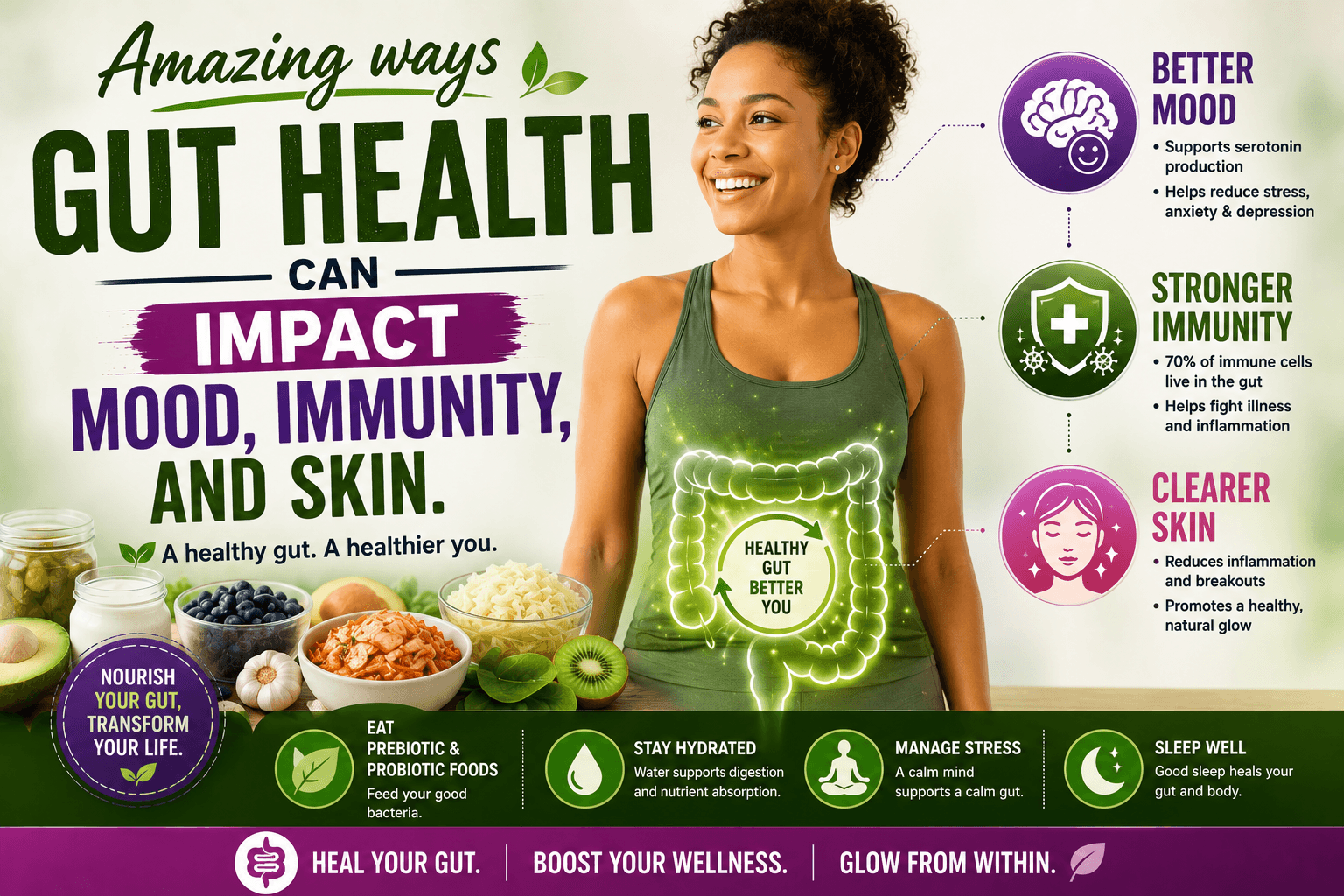
I remember a season when I was doing everything I thought was ‘healthy’ — eating a decent breakfast, trying to get my steps in, even taking a few supplements — but I still felt off. My mood was flatter than usual, my skin was acting up, and I seemed to catch every little bug going around. It turned out I had been paying attention to the visible stuff and ignoring one of the biggest clues: my gut health. Once I started looking at the gut microbiome and how it connects to the rest of the body, a lot of things finally made sense.
Gut health and mood: the gut-brain connection is real
If you have ever noticed that stress shows up in your stomach first, you are not imagining it. The gut-brain connection is one of the clearest examples of how closely the body works together. When your gut is irritated, unbalanced, or overloaded with too much processed food, your mood can feel it too.
That is why so many people talk about gut health and mood at the same time. A healthy gut microbiome helps support normal digestion, steadier energy, and a more comfortable day-to-day rhythm. When things are out of balance, you may notice:
- Bloating or stomach discomfort
- Cravings that feel hard to control
- Low energy after meals
- Feeling irritable, foggy, or emotionally drained
- Stress that seems to hit harder than usual
Researchers continue to study this gut-brain connection, and major health organizations recognize the microbiome as an important part of overall health. If you want a deeper look at the science, the NIH Human Microbiome Project is a helpful place to start, and this Cleveland Clinic overview of the gut-brain connection explains it in a simple way.
OTHER RELEVANT BLOG POST



In my own life, I have found that when I improve gut health, my mood tends to feel more stable too. It is not magic. It is just the body responding better when it is being supported well.
If you are trying to build better daily habits, you may also like my article on how to support digestion naturally.
Gut health and immunity: why your gut is such a big deal
Your gut does a lot more than digest food. It also plays a major role in gut health and immunity. In simple terms, your digestive system is one of the body’s first places for checking what comes in and deciding how to respond.
That means the health of your gut microbiome can affect how well your body handles everyday stressors. When gut health is supported, your immune system has a better environment to do its job. When the gut is irritated or inflamed, your body may feel a little more sensitive overall.
Some practical ways to support gut health and immunity include:
- Eating a variety of plant foods each week
- Getting enough fiber
- Staying hydrated
- Sleeping well
- Managing stress before it builds up
The Mayo Clinic guide to probiotics is a useful reference if you are curious about supportive strains and how they are often used. The World Health Organization healthy diet factsheet is also a good reminder that the basics still matter most.
And if you are working on energy, immune resilience, and daily wellness together, my post on best foods for steady energy may help you connect the dots.
Gut health and skin: when the outside reflects the inside
One of the most frustrating parts of poor gut health is that it can show up on your face or body. When people talk about gut health and skin, they are usually talking about how inflammation, digestion, and nutrient absorption can all influence the way skin looks and feels.
For some people, that means more breakouts. For others, it may look like redness, dullness, dryness, or skin that just never seems settled. Of course, skin issues can have many causes, but the gut is one piece worth paying attention to.
I always think of it like this: if your digestion is struggling, your body may not be getting the full benefit of the food you eat. That can affect hydration, nutrient delivery, and inflammation — all things your skin cares about.
It can help to track patterns for a few weeks. I often suggest using a simple notebook, a phone note, or even AI to spot trends in your food, sleep, stress, and skin changes. If you want a structured place to start, my guide to healthy meal planning for busy weeks can make the process much easier.
Foods for gut health that actually help
When people ask me for foods for gut health, I usually keep it simple. You do not need a perfect diet. You need a repeatable one that gives your gut microbiome the fuel it likes.
Here are some of the best foods for gut health:
- Fiber-rich vegetables and fruit: apples, berries, leafy greens, carrots, and broccoli
- Whole grains: oats, brown rice, quinoa, and barley
- Beans and lentils: excellent for feeding beneficial gut bacteria
- Fermented foods: yogurt, kefir, kimchi, sauerkraut, and miso
- Healthy fats: olive oil, avocado, nuts, seeds, and fatty fish
- Water: simple, but very important for digestion
If you are new to fermented foods, start slowly. A little goes a long way. The goal is to improve gut health without shocking your system.
For more on nutrition choices that support everyday wellness, I also wrote about how to read supplement labels so you can make smarter decisions when you shop.
Harvard Health also has useful guidance on the role of fiber in a healthy diet, and that matters because fiber is one of the simplest ways to support your gut microbiome over time.
Habits that can improve gut health over time
Food matters a lot, but it is not the whole story. If you really want to improve gut health, your daily habits deserve attention too. The good news is that most of these habits are simple and realistic.
- Eat more slowly. Digestion starts before the food even reaches your stomach.
- Keep meals balanced. Try to pair protein, fiber, and healthy fat.
- Reduce ultra-processed foods. You do not have to eliminate them completely, but less is usually better.
- Sleep consistently. Poor sleep can make gut symptoms and cravings worse.
- Move your body. A short walk after meals can help digestion more than people realize.
- Manage stress daily. Stress and gut symptoms often feed each other.
- Use AI as a pattern finder. If you track meals, mood, bowel habits, and sleep, AI can help you spot what might be triggering bloating, fatigue, or skin flare-ups.
I love this approach because it is preventive. You are not waiting until you feel terrible. You are paying attention early, making small changes, and protecting your health before bigger problems start.
When supplements may help
Supplements are not a replacement for good food, but they can be useful in the right situation. Some people benefit from probiotics, prebiotics, magnesium, vitamin D, or other targeted support, especially if they have been under stress, eating poorly, or dealing with digestive issues.
That said, supplements work best when they are chosen carefully. Quality, dose, and your personal health needs all matter. This is one reason I always recommend reading labels and checking with a trusted professional before starting something new.
If you want a broader look at preventive health routines, you may also enjoy my article on the importance of regular checkups. Preventive care, good nutrition, and smart supplement use work best together.
Frequently asked questions about gut health
How do I know if my gut health is off?
Common signs include bloating, gas, irregular bowel movements, food cravings, frequent stomach discomfort, low energy, and skin flare-ups. Some people also notice mood changes, poor sleep, or feeling more reactive to stress.
Can gut health affect my mood?
Yes. The gut-brain connection is real, and your gut microbiome can influence how you feel day to day. When gut health is struggling, some people notice more irritability, brain fog, anxiety, or low mood.
Can poor gut health affect immunity?
It can. Gut health and immunity are closely connected because a large part of immune activity happens in and around the digestive system. A balanced gut environment helps your body respond more efficiently to everyday challenges.
What foods are best for gut health?
The best foods for gut health are usually high-fiber plant foods, fermented foods, and simple whole foods. Think oats, beans, lentils, berries, vegetables, yogurt, kefir, sauerkraut, nuts, and seeds. Start with what your body tolerates well and build slowly.
How long does it take to improve gut health?
Some people notice small changes in a few days, while deeper improvements may take weeks or months. The key is consistency. Regular habits usually work better than short bursts of extreme dieting or random supplement use.
Can supplements improve gut health?
Sometimes, yes. Probiotics or other supplements may help certain people, but they are not one-size-fits-all. It is best to choose supplements based on your symptoms, diet, medications, and health goals.
Final thoughts
When you look at gut health through a preventive lens, it becomes clear that the gut is not just about digestion. It is closely tied to mood, immunity, and skin, which means small daily choices can have a bigger impact than most people realize.
If you remember nothing else, remember this: your body gives you clues early. Bloating, mood swings, frequent colds, low energy, and skin changes are not always random. Sometimes they are gentle warnings that your gut needs support.
So start with the basics. Eat more foods for gut health, stay hydrated, sleep well, manage stress, and check in with a healthcare professional when something feels off. Be thoughtful with supplements, use AI as a helpful pattern-finding tool, and keep your preventive health habits consistent. The earlier you act, the easier it is to stay well.
Frequently Asked Questions
How quickly can gut changes affect mood or skin?
It varies, but some people notice changes in digestion, energy, or bloating within days to a few weeks after improving habits. Mood and skin often take longer because they can be influenced by sleep, stress, diet, and hormones too. The gut can be part of the picture, but it usually works best when supported consistently over time.
If I take probiotics, does that automatically improve gut health and immunity?
Not necessarily. Probiotics can help some people in certain situations, but they are not a shortcut. A healthy gut usually depends more on the basics: enough fiber, varied plant foods, hydration, sleep, and stress management. Probiotics may be useful as part of a broader routine, but they work best when the overall diet supports the microbiome.
Can gut issues show up as skin problems even if my digestion seems normal?
Yes, sometimes. Skin changes can reflect inflammation, nutrient absorption issues, or subtle digestive imbalance even when you do not have obvious stomach symptoms. That said, skin concerns can also come from many other causes, including hormones, skincare products, and stress. The gut is one possible factor, not the only one.
Why do stress and gut health seem to affect each other so much?
The gut and brain communicate closely, so stress can change digestion, appetite, and even how your body responds to food. In the other direction, an irritated gut can make you feel more tired, foggy, or emotionally off. This two-way connection is why stress management can matter so much for both mood and digestion.
What is the simplest way to support gut health without overcomplicating it?
Start with consistent basics: eat a wider range of plant foods, get enough fiber, drink water regularly, sleep well, and reduce chronic stress where you can. You do not need a perfect routine to see benefits. Small, repeatable habits often help the gut more than dramatic resets or expensive supplements.

Pingback: Fiber deficiency crisis hidden reason for poor digestion.