A few years ago, I was blaming age for my foggy mornings, slow recall, and tired afternoons. Then I looked at my meals and realized I was feeding my body enough, but not really feeding my brain. That is when I started learning about the MIND Diet, simple preventive health habits, and even a few AI tools that helped me spot patterns in my eating. If you want a simple way to stay organized while you build better habits, keep this nearby: 90 DAYS FOOD AND FITNESS JOURNAL.
What the MIND Diet Is
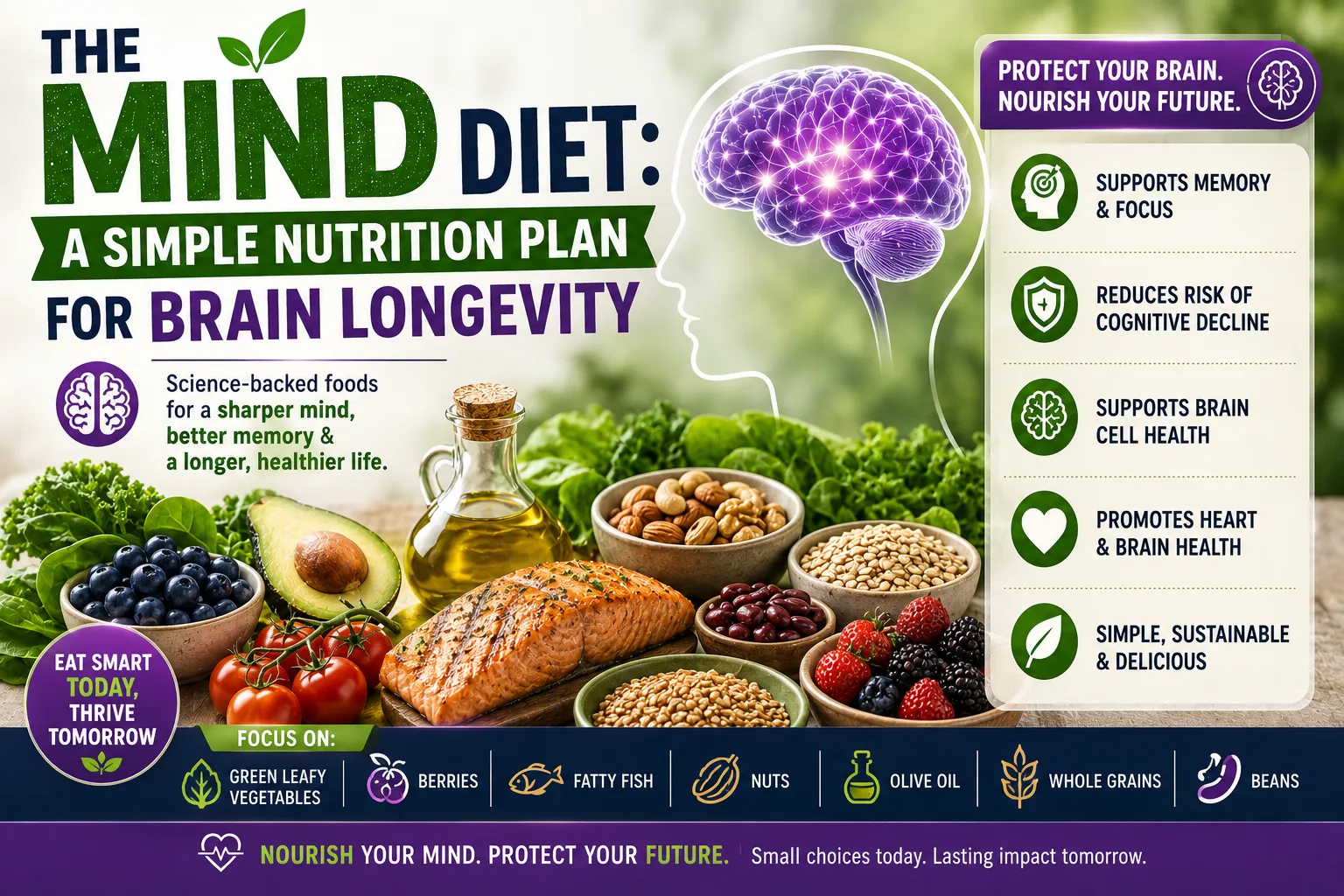
The MIND Diet is a food plan created to support brain health and healthy aging. It blends the best parts of the Mediterranean diet and the DASH diet, with a special focus on foods that may help protect memory over time. The name stands for Mediterranean-DASH Intervention for Neurodegenerative Delay, but do not let the long name scare you. At its core, it is a practical way to eat more leafy greens, berries, nuts, beans, whole grains, fish, and olive oil while cutting back on highly processed foods.
What I like most is that it does not feel extreme. You do not need to eat perfectly. You just need to build a better pattern most days. If you want more simple meal ideas, you can also check my brain-boosting foods guide and balanced plate basics.
Why Brain Longevity Starts on the Plate
When we talk about brain longevity, we are really talking about giving the brain steady support for the long run. The MIND Diet may help because it favors foods that support healthy blood flow, stable blood sugar, lower inflammation, and better overall nourishment. That matters because your brain does not work well when your body is running low on fuel or missing key nutrients.
OTHER RELEVANT BLOG POST


Here is the easy version I use in real life:
- Eat leafy greens most days.
- Choose berries instead of sugary snacks when you can.
- Add beans, nuts, and whole grains for steady energy.
- Use olive oil as a simple everyday fat.
- Include fish regularly if you eat it.
- Limit fried foods, pastries, and heavy ultra-processed meals.
If you like trusted nutrition references, I also recommend the Harvard T.H. Chan Nutrition Source, the NIH Office of Dietary Supplements fact sheets, and the Alzheimer’s Association brain health page.
A Simple MIND Diet Day
If you are wondering what this looks like on a normal weekday, here is a simple example:
- Breakfast: Oatmeal with walnuts and blueberries.
- Lunch: Salad with leafy greens, beans, olive oil dressing, and grilled salmon or chicken.
- Snack: A handful of nuts or fruit.
- Dinner: Brown rice, roasted vegetables, and fish or lentils.
This is not about being fancy. It is about repeating small brain-friendly choices until they become normal.
Vitamin Deficiency Signs I Never Ignore
One reason I pay close attention to the MIND Diet is that many people are walking around with low-grade nutritional deficiencies and do not realize it. Vitamin deficiency signs are often subtle at first. The signs of vitamin deficiency can look like everyday stress, a busy schedule, or just getting older.
Some common vitamin deficiency symptoms and nutrient deficiency symptoms include:
- Fatigue that does not improve with rest
- Brain fog or trouble focusing
- Brittle nails or hair shedding
- Dry skin or mouth sores
- Low mood or irritability
- Muscle cramps or weakness
- Numbness, tingling, or balance changes
- More frequent colds or slow healing
A vitamin and mineral deficiency can show up in different ways depending on what is low. That is why it is smart to look at the full picture, not just one symptom.
Common Vitamin Deficiencies in Real Life
Some common vitamin deficiencies show up again and again, especially in busy adults, picky eaters, older adults, people with digestive issues, and anyone following a restricted diet. A few examples are:
- Vitamin D: Low sun exposure, indoor work, or limited fortified foods can make this common.
- Vitamin B12: This is more common in older adults and people who eat very little animal food.
- Folate: Low intake of leafy greens, beans, and fortified grains can contribute.
- Iron: Low intake or blood loss can lead to tiredness and low energy.
- Vitamin C: Not eating enough fruit and vegetables can matter here.
- Magnesium and omega-3s: These are not vitamins, but low intake can still affect energy, mood, and brain health.
When people search for vitamin deficiency symptoms, they often expect one big dramatic sign. In reality, the body usually whispers before it shouts.
Vitamin Deficiency Causes
There are many vitamin deficiency causes, and most of them are practical, not mysterious. They can include poor food variety, too many highly processed meals, digestive conditions that affect absorption, medication side effects, heavy alcohol use, higher nutrient needs, or simply not eating enough of the right foods over time.
Other reasons include:
- Skipping meals often
- Following a very limited diet without planning
- Low appetite during stress or illness
- Little time for grocery shopping and cooking
- Age-related changes in absorption
This is why prevention matters. If you can spot the pattern early, you have a much better chance of correcting it before it becomes a bigger problem.
How to Identify Vitamin Deficiency
If you are trying to figure out how to identify vitamin deficiency, start with your body, your food, and your lab work. No single symptom can diagnose a deficiency, but patterns can give you a strong clue.
- Track your symptoms for 1 to 2 weeks. Notice fatigue, mood shifts, cravings, sleep changes, and brain fog.
- Look at your meals honestly. Are you missing greens, fruit, protein, or healthy fats most days?
- Use a journal or AI tool. I like to use AI to summarize food logs and spot patterns, but never as a diagnosis.
- Ask for lab work. A clinician can check for vitamin and mineral deficiency with the right tests.
- Review medications and health history. Some medicines and conditions make absorption harder.
One helpful prompt for AI is: Summarize my 7-day food log and highlight possible nutrient gaps. Another is: Create a MIND Diet grocery list based on my current eating pattern. That is preventive health in a simple, practical form.
Vitamin Deficiency Treatment
Vitamin deficiency treatment depends on the cause, the lab results, and your overall health. Food comes first whenever possible, but supplements can be useful when a real gap is confirmed or strongly suspected by a professional.
- Fix the diet pattern with more nutrient-rich meals.
- Address absorption problems or medication issues with your clinician.
- Use supplements only as needed and ideally with guidance.
- Recheck levels if your provider recommends it.
For people who want a simple place to begin their supplement routine, here is a helpful next step:
Still, remember this: supplements should support a healthy pattern, not replace one. The real goal is steady nourishment, not quick fixes.
How I Use AI for Preventive Health
I love AI as a helper because it can save time and reveal patterns that are easy to miss. For example, I can upload a food log or type in a few meals, then ask AI to point out whether I am getting enough fiber, greens, protein, or healthy fats. I can also ask it to suggest meal prep ideas that fit the MIND Diet.
Here are a few ways AI can support preventive health:
- Summarize food and symptom patterns
- Build a grocery list from your favorite brain-healthy foods
- Remind you to drink water and eat regularly
- Help you prepare questions for your doctor
- Turn healthy habits into a simple weekly plan
The key is to use AI as a guide, not a replacement for medical advice. If symptoms are persistent or severe, get evaluated.
Easy Swaps That Make the MIND Diet Feel Doable
You do not need to overhaul everything overnight. Try one or two swaps at a time:
- Swap chips for walnuts or almonds.
- Swap white toast for oatmeal or whole grain bread.
- Swap sugary dessert for berries and yogurt.
- Swap creamy dressing for olive oil and lemon.
- Swap one red or processed meat meal for beans or fish.
These tiny choices add up. That is how a brain-friendly routine becomes a lifestyle.
Focal key phrase: MIND Diet for brain longevity
Meta description: Learn how the MIND Diet supports brain longevity, spot vitamin deficiency signs, and use food, AI, and simple habits to protect brain health.
FAQ
What is the MIND Diet good for?
The MIND Diet is designed to support brain health, memory, and healthy aging by emphasizing nutrient-rich foods that may help protect cognitive function over time.
Can the MIND Diet prevent dementia?
The MIND Diet may lower risk and support brain health, but no diet can promise prevention. It works best as part of a larger healthy lifestyle that includes sleep, exercise, stress management, and medical care.
What are the most common vitamin deficiencies?
Some of the most common vitamin deficiencies include vitamin D, B12, folate, iron, and sometimes vitamin C. The exact risk depends on diet, age, health conditions, and lifestyle.
Should I take supplements if I feel tired?
Not automatically. Fatigue can come from sleep issues, stress, dehydration, low iron, thyroid problems, and many other causes. It is better to check the reason first and then treat it correctly.
Can AI really help me with nutrition?
Yes, AI can help you track meals, notice patterns, and build a better plan, but it should never replace a clinician, lab testing, or personalized medical advice.
If you take one thing from this post, let it be this: brain longevity is built on small daily choices. Start with one MIND Diet swap this week, pay attention to vitamin deficiency symptoms, and use tools like your journal, your grocery list, and even AI to stay consistent. You do not need perfection. You need a pattern you can keep.
Frequently Asked Questions
Do I have to follow the MIND Diet perfectly for it to be useful?
No. The MIND Diet is designed to work as a pattern, not a perfection test. What matters most is consistency over time: choosing brain-supportive foods most days and limiting ultra-processed foods most of the time. A few off-plan meals will not cancel your progress, especially if your regular routine still includes greens, berries, nuts, beans, whole grains, and olive oil.
How is the MIND Diet different from just eating Mediterranean or DASH-style foods?
The MIND Diet borrows from both diets, but it puts extra emphasis on foods linked to brain health, especially leafy greens and berries. It also focuses more directly on reducing foods that may not support cognition, like fried foods, pastries, and heavy processed meals. So it is more targeted for brain longevity than either plan alone.
If I already have brain fog, can the MIND Diet help, or is it only preventive?
It is mainly promoted as a preventive approach, but many people use it to improve overall nutrition and support clearer thinking. If brain fog is related to poor diet, unstable blood sugar, or low nutrient intake, better eating patterns may help. Still, persistent brain fog can also signal a deficiency or medical issue, so it should not be ignored.
Can someone follow the MIND Diet if they do not eat fish or animal foods?
Yes. The MIND Diet can be adapted to vegetarian or mostly plant-based eating. You can rely on beans, lentils, nuts, seeds, whole grains, leafy greens, berries, and olive oil for the foundation. If you avoid animal foods, pay extra attention to nutrients like B12, iron, and omega-3s, since those are more likely to be low.
Why does the article mention vitamin deficiency signs alongside the MIND Diet?
Because some symptoms people blame on aging or stress can actually come from low nutrient intake. Fatigue, brain fog, brittle nails, mood changes, or tingling can be clues that something is missing in the diet. A MIND-style eating pattern may help reduce those gaps, but ongoing symptoms may need testing and professional evaluation.