
I still remember the first time I tried to push through a packed week with too much coffee, too little sleep, and a brain that felt like it had 27 tabs open. I wanted better focus, not a miracle. If that sounds familiar, start by tracking your habits with the 90 DAYS FOOD AND FITNESS JOURNAL so you can see what really affects your energy, mood, and mental clarity.
When people ask me about the top 10 nootropics ranked by AI, I think of it like this: AI can help us sort the noise, compare evidence, and spot patterns faster than we can on our own. But it still needs a human brain to ask the right question: which brain supplements actually work, and which ones are just expensive hope in a bottle?
In plain English, nootropics are supplements or compounds people use to support focus, memory, alertness, or mental stamina. Some can help in the right situation. Others are better known than they are proven. And the basics still matter most: sleep, movement, hydration, protein, stress management, and consistency. If you want more practical wellness content, you may also like my internal posts on AI and preventive health and how to read supplement labels.
How I ranked these nootropics
I used a simple evidence-first approach, the same way a smart AI tool would:
OTHER RELEVANT BLOG POST



- Human research: Does it have real studies behind it?
- Noticeable benefit: Can most people actually feel a difference?
- Safety: Is it usually well tolerated for healthy adults?
- Practical use: Is it easy to fit into everyday life?
- Value: Does it make sense before you spend more money?
That is why the list starts with the most dependable options first.
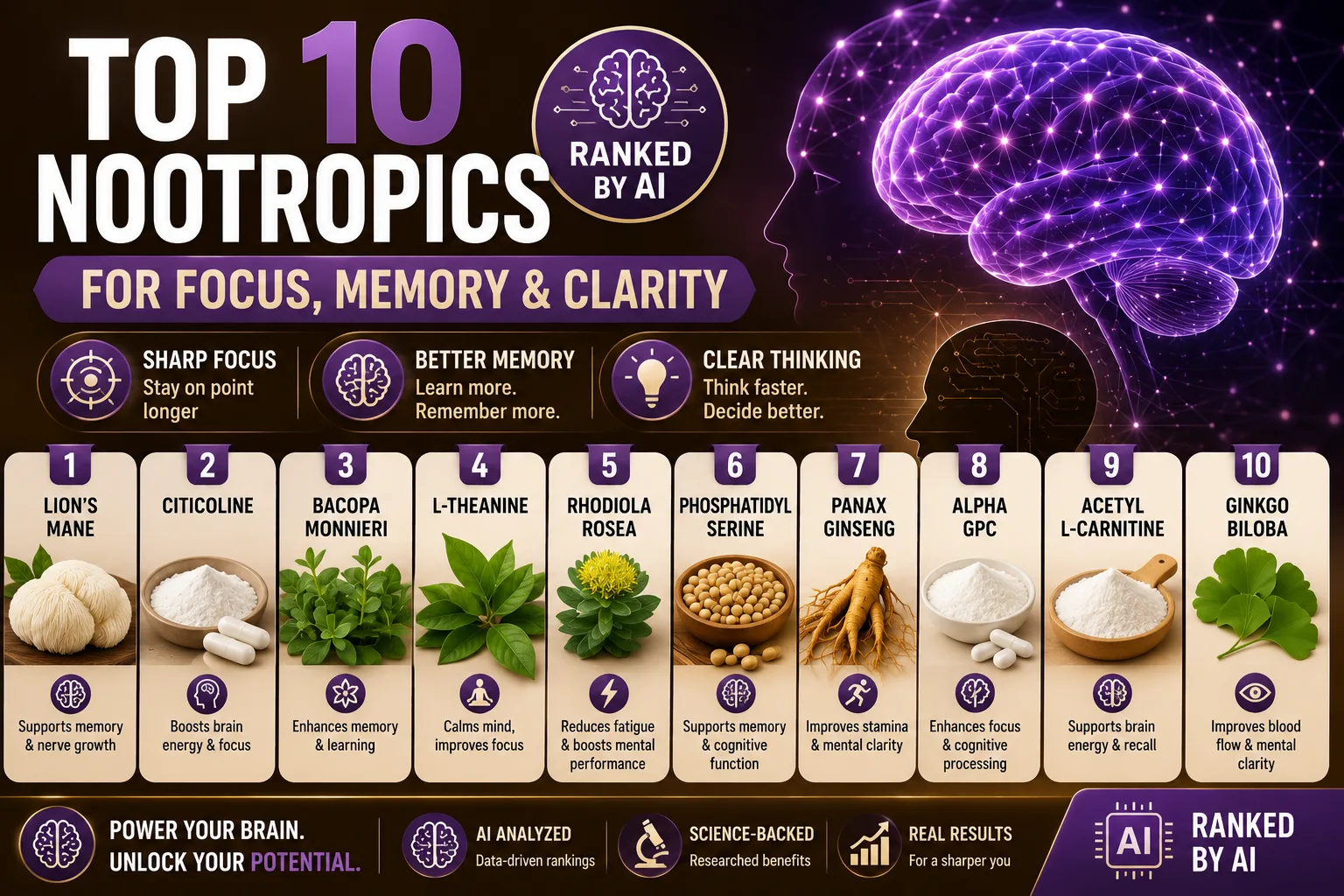
Top 10 Nootropics Ranked by AI
- Caffeine + L-theanine—This is the best-known focus combo for a reason. Caffeine helps you feel alert, while L-theanine can smooth out the jittery edge. For many people, this is the most noticeable and practical place to start.
- Creatine—Best known for fitness, but it may also support brain energy, especially when you are tired, stressed, or not eating much red meat. It is simple, affordable, and backed by a lot of real-world use.
- Omega-3 fatty acids—These are not a quick fix, but they support overall brain and heart health. They are especially worth considering if you do not eat fatty fish often.
- Bacopa monnieri—A traditional herb that may help memory and learning over time. It usually works slowly, so patience matters here.
- Citicoline (CDP-choline)—Often used for focus and mental energy. Some people like it because it feels clean and steady rather than overly stimulating.
- Rhodiola rosea—This adaptogenic herb is often used for mental fatigue and stress. It may be more useful on busy or draining days than on a lazy Sunday.
- L-tyrosine—May help when you are under pressure, sleep-deprived, or mentally overloaded. It is not a magic everyday focus pill, but it can be useful in the right context.
- Magnesium L-threonate—Popular for brain health and relaxation support. Some people find it helpful for winding down and supporting memory, but results vary.
- Lion’s mane mushroom—Very trendy, with early research that looks interesting. Still, the evidence is not as strong as the top few options, so I would keep expectations realistic.
- Ginkgo biloba—Long history, mixed evidence. It may help some people, but it is not one I would rank near the top for most healthy adults.
Which ones are most worth trying first?
If you want the shortest possible answer, I would start with caffeine + L-theanine for focus, creatine for overall brain and body support, and omega-3s if your diet is low in healthy fats. Those three are usually the easiest to justify before you experiment with more niche options.
How to try nootropics safely
- Start with one supplement at a time. If you try three new things at once, you will not know what is helping.
- Begin with the lowest sensible dose. More is not always better.
- Track results for 2 to 4 weeks. Notice focus, sleep, digestion, mood, and headaches.
- Choose third-party tested products. Look for quality seals and clear labels.
- Check for medication interactions. Especially if you use blood thinners, blood pressure meds, or antidepressants.
- Ask your clinician if you are pregnant, nursing, or managing a condition.
A simple tool that makes this easier
The easiest way to see whether a supplement is worth keeping is to use a short daily log. Write down your sleep, energy, focus, exercise, water intake, and mood. If you want a deeper system for doing that, grab 90 DAYS FOOD AND FITNESS JOURNAL and make the results visible instead of guessing.
What the bigger health picture says
One of the biggest mistakes people make is expecting supplements to do all the work. In preventive health, the best results usually come from small habits stacked together: better sleep, regular movement, enough protein, stress care, and smart supplement choices. That is where AI can be useful too. It can help you compare options, summarize research, and build a routine that is more personalized and less random.
For more trusted background reading, I like the NIH Office of Dietary Supplements and the FDA dietary supplements guide. They are good places to check facts before buying anything new.
FAQ
Do nootropics really work?
Some do, especially for short-term focus, alertness, or when you are correcting a deficiency. The best results usually come from combining supplements with sleep, food, and movement.
What is the safest nootropic to start with?
For many healthy adults, caffeine with L-theanine is a simple first try. Creatine and omega-3s are also common starter options, depending on your goals.
How long should I test a supplement before deciding?
Give most supplements at least 2 to 4 weeks, unless you notice side effects sooner. Keep notes so you can judge real patterns instead of just going by memory.
Can I take several nootropics together?
Sometimes, yes, but it is smarter to build slowly. Start with one, learn how your body responds, and check with a healthcare professional if you take medications or have a medical condition.
Final thought: if you want better brain health, do not chase every trend. Pick one supplement that fits your goal, track the result, and keep your routine simple. That is the most sustainable way to use AI, supplements, and preventive health together.
Frequently Asked Questions
Why did caffeine + L-theanine rank above stronger-sounding supplements like lion’s mane or ginkgo?
Because the ranking was based on practical evidence, not hype. Caffeine + L-theanine has a clearer track record for noticeable, same-day focus benefits in healthy adults. Lion’s mane and ginkgo are interesting, but their evidence is either still emerging or mixed, so they are less dependable if you want a supplement you can actually feel working.
Can nootropics help if my real problem is poor sleep or burnout?
Sometimes, but only to a point. Nootropics may make you feel a bit sharper, but they cannot fully compensate for chronic sleep loss, high stress, or inconsistent meals. If your brain feels foggy most days, fixing sleep, hydration, protein intake, and workload will usually have a bigger effect than any supplement.
Is it better to take one nootropic at a time or stack several together?
Start with one at a time. Stacking makes it hard to tell what is actually helping and what is causing side effects like jitters, stomach upset, or poor sleep. Once you know how one supplement affects you, you can decide whether a simple combination makes sense, such as caffeine with L-theanine.
How long should I try a nootropic before deciding whether it works?
It depends on the supplement. Stimulant-based options like caffeine can be judged the same day, while others such as bacopa, omega-3s, or magnesium may need weeks of consistent use. A good rule is to track your results for 2 to 4 weeks before deciding, unless you notice clear side effects sooner.
Are these nootropics safe for everyone, or are there people who should avoid them?
They are not for everyone. Pregnant or breastfeeding people, those with heart conditions, anxiety disorders, bleeding issues, thyroid problems, or anyone taking medication should be especially careful. Even common supplements can interact with drugs or worsen symptoms, so it is smart to check with a healthcare professional before starting.


Pingback: Fiber deficiency crisis hidden reason for poor digestion.