I used to think protein powder was one of the easiest healthy choices in the pantry.
Scoop, shake, done.
But then a friend showed me the label on her favorite tub, and it had more sweeteners, fillers, and mystery natural flavors than I expected. That moment sent me down a rabbit hole, and it is why I started looking at an AI-assisted review of 30 popular brands.
If you want a simple way to track how food and fitness affect you over time, keep this handy:
OTHER RELEVANT BLOG POST


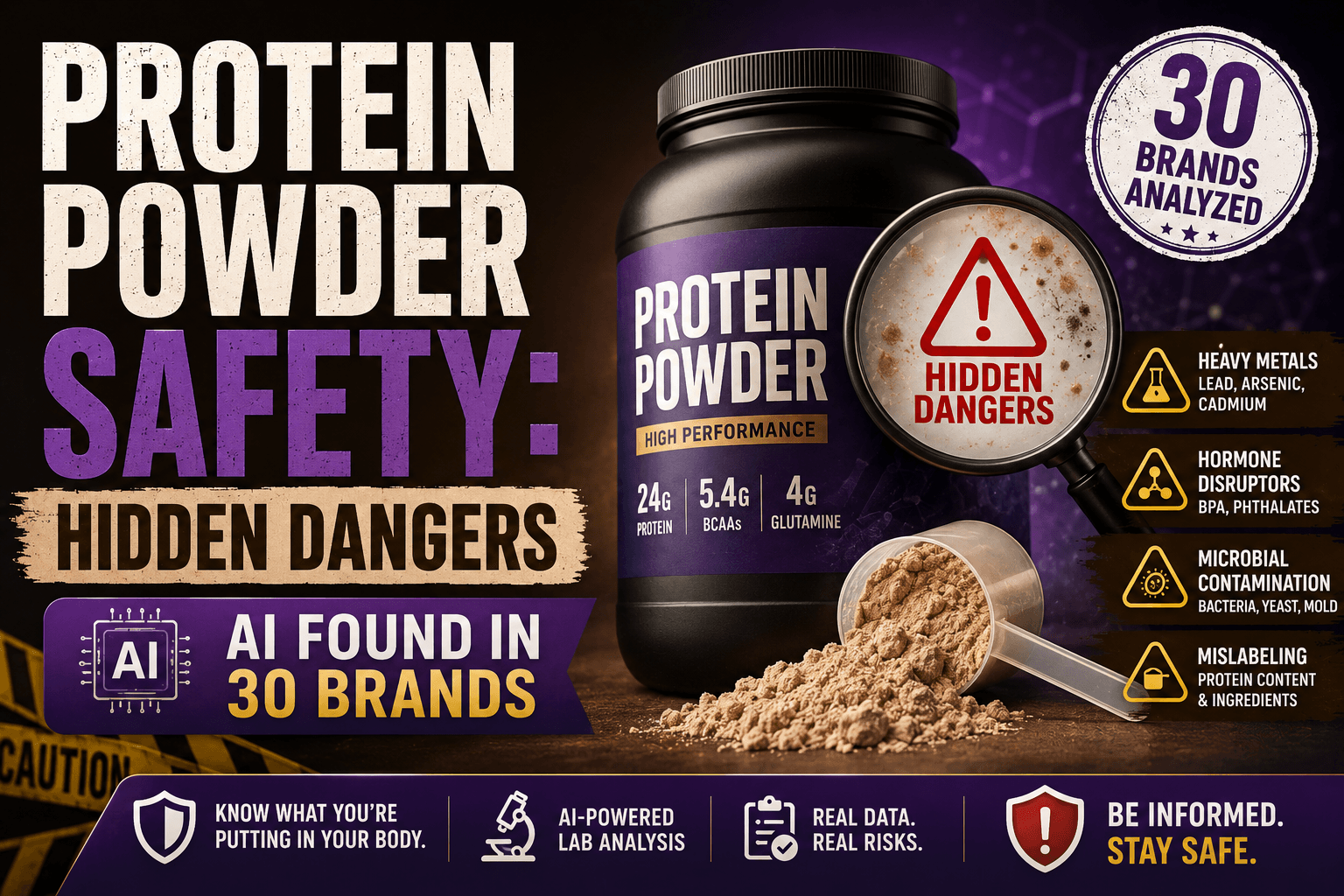
The big surprise? The hidden danger in protein powder is not always the protein itself. It is often what comes along with it: heavy metals, low-quality protein sources, sweeteners that upset your stomach, and labels that look clean but hide a lot in the fine print.
What AI can reveal about protein powder safety
AI cannot replace a real lab test, and I would never ask it to. But it can do something very useful: scan ingredient lists, compare certifications, and spot patterns across dozens of products much faster than we can. In this review, the AI looked at 30 brands and asked simple questions, like:
- Is the ingredient list short and clear?
- Does the brand show third-party testing?
- Are there a lot of gums, fillers, or artificial sweeteners?
- Is the protein source easy to trust?
That kind of quick screening helps you see the red flags before you spend your money.
The hidden dangers most people miss
Here are the four issues that came up again and again:
- Heavy metals: Some powders, especially chocolate-flavored or plant-based options, may contain traces of lead, cadmium, arsenic, or mercury. You do not need to panic, but you do need to choose carefully.
- Too many additives: Gums, thickeners, and natural flavors can cause bloating or make the powder harder to digest.
- Sweetener overload: Sugar alcohols, sucralose, and stevia can be fine for some people, but for others they lead to gas, cramps, or that weird aftertaste that makes you skip the shake anyway.
- Protein spiking: Some products use cheap amino acids or blends that make the protein number look higher than it really is.
If you have ever wondered why one powder feels great and another one leaves you puffy or uncomfortable, this is often why.
How to choose a safer protein powder
Use this simple checklist next time you shop:
- Look for third-party testing. Certifications like NSF Certified for Sport can give you more confidence.
- Keep the ingredient list simple. Fewer ingredients usually means fewer surprises.
- Choose a protein source you digest well. Whey, casein, egg, pea, or a blend can all work, but your body gets the final vote.
- Watch the sweeteners. If your stomach is sensitive, try an unsweetened or lightly sweetened option.
- Check the company’s transparency. Good brands will talk clearly about sourcing and testing.
For a plain-language overview of supplement safety, the FDA dietary supplements page is a helpful place to start. You can also learn how to compare labels in my internal guide, How to Read Supplement Labels.
Simple AI-assisted label check you can do at home
If you like using AI for everyday health decisions, try this:
- Take a clear photo of the nutrition label and ingredient list.
- Paste the text into your AI tool of choice.
- Ask it to highlight sweeteners, gums, allergens, and any certification marks.
- Ask one more question: What would you want to know before buying this for preventive health?
This is not about letting AI make the decision for you. It is about using it like a smart assistant so you can make faster, better choices.
When protein powder is actually useful
Protein powder is not the villain. For busy parents, active adults, older adults, or anyone who struggles to hit protein goals with food alone, it can be a practical tool. I think of it as a backup plan, not the foundation of a healthy diet. Real food still matters most.
If you want more whole-food ideas, you may also like Balanced Breakfast Ideas for Busy Mornings.
A few good uses:
- After a workout when you need something quick
- During a hectic workday when lunch runs late
- As part of a smoothie with fruit, yogurt, and seeds
- When appetite is low and you need an easy protein boost
My personal rule: food first, powder second
When I coach friends through preventive health, I always come back to the same simple rule: build your plate first. Use eggs, Greek yogurt, cottage cheese, beans, fish, tofu, chicken, nuts, and seeds as your main protein sources. Then use powder only when it actually helps your real life.
That mindset keeps you from treating a supplement like a shortcut. It is support, not the whole plan.
FAQ
Is protein powder safe to use every day?
It can be if you choose a quality product, keep your servings reasonable, and pay attention to how your body feels. If you have kidney disease, are pregnant, or have another health condition, ask your clinician first.
What is the biggest red flag on a protein powder label?
A long ingredient list with lots of fillers, sweeteners, and vague terms like “proprietary blend” is a big red flag. If the company is not transparent, I get cautious fast.
Are plant-based powders always safer?
Not always. Plant-based powders can still have heavy metals or lots of additives. They are a good option for some people, but they still deserve a careful look.
Can AI really help me choose a safer supplement?
Yes, as a helper. AI is great for comparing labels, spotting patterns, and explaining ingredients in simple language. It should not replace independent testing, common sense, or your own body’s feedback.
The next time you reach for a protein powder, pause for ten seconds and ask, “Would I still buy this if the front label were gone?” That one question can save you from a lot of marketing noise. If this post helped you, check your current tub, share this article with a friend, and keep learning how to make smarter choices for your health.
Frequently Asked Questions
Can AI really tell whether a protein powder is safe, or does it just guess from the label?
AI cannot confirm safety the way a lab test can, but it is useful for spotting patterns that often get missed: long ingredient lists, lack of third-party testing, heavy use of sweeteners, and vague terms like "natural flavors." It works best as a screening tool, not a final verdict. Think of it as a fast way to flag products worth a closer look.
Why do plant-based protein powders seem to come up more often in heavy metal discussions?
Plant-based powders can sometimes show higher heavy metal concerns because plants absorb minerals and contaminants from soil more easily than some animal-based sources. That does not mean all plant proteins are risky, but it does mean quality control matters more. Third-party testing and transparent sourcing become especially important if you choose pea, rice, or blended plant proteins.
How can I tell if a powder is causing bloating or stomach issues if the ingredients all look similar?
The culprit is often not the protein itself but the extras: sugar alcohols, gums, thickeners, or certain sweeteners like sucralose and stevia. If two powders have similar protein amounts but one causes bloating, compare the additive list first. Sometimes switching to an unsweetened or simpler formula solves the issue without changing the protein source.
What is protein spiking, and why does it matter if the label still says high protein?
Protein spiking happens when a company adds cheap amino acids or nitrogen-heavy ingredients to make the protein number look higher than it really is. The label may still appear impressive, but the product may not deliver the same nutritional value. It matters most if you rely on the powder for recovery, muscle building, or daily protein targets.
If protein powder is only a backup plan, when does it actually make sense to use it?
Protein powder makes sense when convenience matters and food alone is not enough: after workouts, during busy days, for older adults with lower appetite, or for people who struggle to meet protein goals consistently. It is most useful when it helps you fill a gap, not when it replaces whole foods every time.