
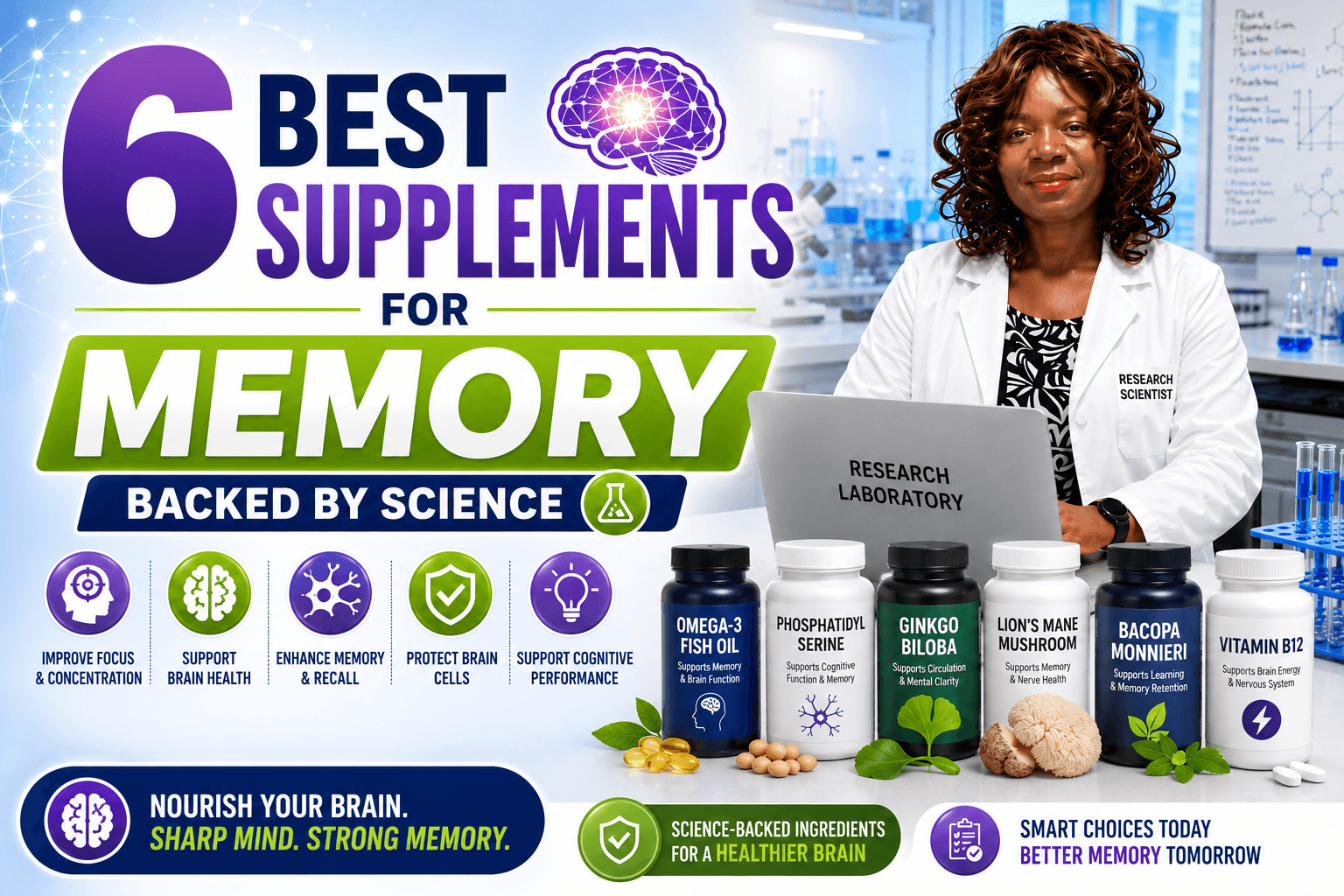
Ever walk into a room and forget why you’re there?
DOWNLOAD YOUR 90-DAY HEALTH AND WELLNESS JOURNAL
Or maybe you’ve noticed your brain feels like it’s buffering more often than usual. You’re not alone. Memory lapses happen to everyone, but they hit harder when you’re stressed, exhausted, or stretched too thin.
That’s when a lot of people reach for supplements, supplement delivery forms, hoping for a quick brain upgrade.
OTHER RELEVANT BLOG POST

But here’s the catch: most “brain boosters” on the market are marketing fluff.
The real question is, which ones actually have science to back them up? Let’s cut through the noise. Here are five supplements proven to support memory, plus three that aren’t worth your time (or money).
Why Memory Health Matters More Than You Think
Memory isn’t just about remembering where you left your keys. It’s tied to learning, decision-making, focus, and even your emotional regulation. When your memory is sharp, you adapt faster, work smarter, and deal with challenges without feeling like you’re drowning.
Sure, the basics—good sleep, exercise, and nutrition—are the foundation of brain health. But if you want extra support, supplements can give you a measurable edge with coffee and water vitamin timing.
Benfotiamine (Supercharged Vitamin B1)
I’m starting here because this one doesn’t get nearly enough hype—and yet, it’s been a game-changer for me personally. I’ve been taking benfotiamine for the past two years, and the difference in memory clarity and recall has been tremendous. I’m not talking about placebo-level improvement—I mean sharper focus, faster word recall, and noticeably less brain fog.
Benfotiamine is a fat-soluble form of thiamine (vitamin B1). Unlike regular B1, it’s absorbed much more efficiently and actually reaches the brain in meaningful amounts. Research shows that benfotiamine:
- Supports brain metabolism by improving glucose utilization, which is critical since the brain runs almost entirely on glucose.
- Protects neurons from oxidative stress and advanced glycation end products (AGEs), both of which are linked to cognitive decline and Alzheimer’s disease.
- Improves memory performance: A study published in Neuropharmacology found benfotiamine supplementation improved cognitive function in people with mild cognitive impairment.
- Slows brain aging: Animal studies suggest it protects hippocampal neurons—the part of the brain responsible for learning and memory.
👉 Typical dosage: 150–300 mg daily, often taken in divided doses.
From experience, consistency is key. The effects build gradually, but over months, the improvement in mental sharpness feels undeniable.
1. Omega-3 Fatty Acids (DHA + EPA)
Omega-3s are basically brain fuel. DHA makes up about 30% of your brain’s fat content, keeping cell membranes flexible so neurons fire efficiently. EPA, on the other hand, controls inflammation that can mess with focus and recall.
📊 A meta-analysis in the Journal of Alzheimer’s Disease found that omega-3 supplements improved memory in adults with mild memory complaints.
👉 The sweet spot: 1,000–2,000 mg daily of combined DHA and EPA, leaning heavier on DHA if memory support is your goal.
✅ Pro tips:
- Stick with molecularly distilled fish oil (to avoid mercury/PCBs).
- Pick triglyceride form over ethyl ester for better absorption.
- Vegan? Go with algae oil, but you’ll need a higher dose to match fish oil’s punch.
2. Citicoline (CDP-Choline)
Citicoline helps your brain crank out acetylcholine—the neurotransmitter behind learning, focus, and short-term memory. It’s not just a supplement—it’s used as a prescription drug in Europe and Japan for cognitive decline.
Studies show it improves recall, attention, and cognitive performance, especially in older adults.
👉 Dose range: 250–1,000 mg daily.
Side effects are rare, but you might feel mild stomach discomfort or a headache when starting out. Small trade-off for better brainpower.
OTHER RELATED BLOG POST
3. Vitamin D
Think of vitamin D as more than a bone builder—it’s a cognitive MVP. Low levels are linked to slower processing, mood dips, and higher dementia risk.
The problem? Roughly 40% of Americans are deficient. No wonder brain fog feels like a national pastime.
👉 Dosage tips:
- If deficient, doctors may start you at 5,000 IU/day until levels normalize.
- For maintenance, 1,000–2,000 IU/day of vitamin D3 (not D2).
- Bonus: Make sure you’re getting enough magnesium, since it helps activate vitamin D.
4. B Vitamins (B6, B9, B12)
B vitamins are like maintenance workers for your brain. Together, they keep homocysteine levels in check—a compound that, when elevated, damages blood vessels and fuels memory decline.
B12 is the one most people struggle with. Aging lowers stomach acid (needed for absorption), and vegans or vegetarians are often deficient since it’s found mostly in animal foods.
👉 Look for methylated forms: methylfolate (B9) and methylcobalamin (B12). They’re easier for your body to actually use.
5. Magnesium L-Threonate
Not all magnesium is created equal. Magnesium L-threonate is the only form proven to cross the blood-brain barrier, meaning it actually raises brain magnesium levels where memory support matters most.
Studies show it boosts neuroplasticity, improving working memory and recall—especially in older adults.
👉 Dose: 1,500–2,000 mg daily (about 144 mg of elemental magnesium).
👉 Bonus: It can also improve sleep, which strengthens memory consolidation.
3 Supplements That Aren’t Worth It
1. Ginkgo Biloba
Once hyped as the memory pill, recent studies show its benefits are minimal unless you already have cognitive decline. Plus, it can interact with blood thinners—risky business for little reward.
2. Proprietary “Brain Boost” Blends
These are the multilevel-marketing darlings with shiny labels and “cutting-edge” claims. The catch? Most use “fairy-dusting”—tiny, ineffective amounts of trendy ingredients just to slap them on the bottle. If they don’t list exact dosages, it’s probably a scam.
3. High-Caffeine Nootropic Stacks
That jolt of energy feels nice… until the crash hits. Over time, caffeine-heavy stacks wreck your sleep, which is the exact opposite of what you want for memory. Skip the overpriced jitters and stick to nutrients with real long-term benefits.
How to Approach Memory Supplements the Smart Way
Here’s how to get results without wasting money:
- Lock down the basics first. Supplements can’t outwork a bad diet, poor sleep, and chronic stress.
- Test before you guess. Especially with vitamin D and B12. Fixing deficiencies can be game-changing.
- Add one at a time. Give each supplement at least a month before stacking another, so you know what’s actually working.
- Track results. Don’t just “feel it out.” Use memory apps, journaling, or even pay attention to how often you forget things.
- Buy smart. Look for third-party testing seals (USP, NSF, and ConsumerLab) to make sure the bottle isn’t full of lies.
- Be patient. Brain benefits usually take 3–6 months to show up. It’s a slow burn, not a caffeine high.
Final Thoughts
Supplements can’t replace sleep, diet, and exercise, but the right ones—omega-3s, citicoline, vitamin D, B vitamins, and magnesium L-threonate—can actually support memory and cognitive function over time. Skip the ginkgo, gimmicky blends, and caffeine-heavy nootropic stacks. Your brain deserves better than hype.
Check back for more content where we’ll dig into how actual food—not pills—reshapes your brain chemistry and influences focus, mood, and memory.
Related reading: omega-3 fatty acids